On June 8, CIHEAM Bari will host the closing workshop for the advanced specialized course in "Precision Agriculture for the Mediterranean Region", attended by 16 trainees from 12 countries.
The core of the workshop will be the presentation of concept notes, prepared by 4 working groups, on the transition towards the application of precision agriculture in their national context.
A committee, including experts from academia and companies that helped design the course content, will evaluate the output of the 4 working groups through critical analysis of their concept notes.
CIHEAM Bari Director Maurizio Raeli will open the workshop; the meeting will be concluded by Deputy Director Biagio Di Terlizzi, who will outline CIHEAM Bari's future actions in support of the project proposals.
During the workshop, two videos will be shown, prepared by the trainees on different technological applications they could appreciate in the agricultural holdings that already implement precision agriculture.
Finally, all trainees will be awarded an attendance certificate.
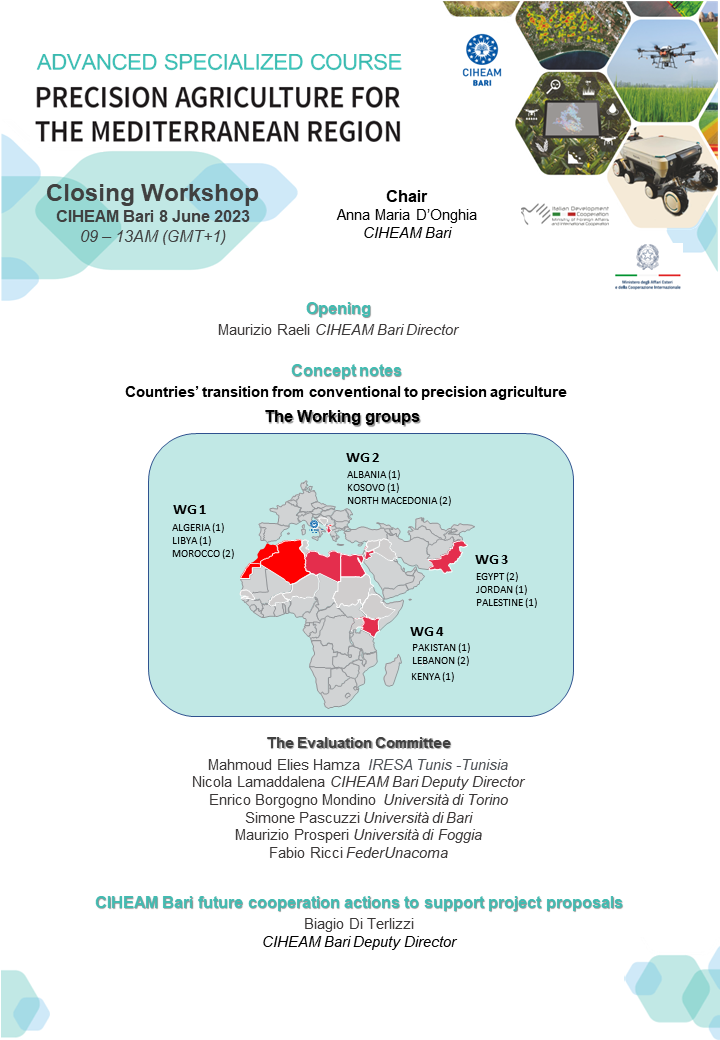

Il prossimo 8 giugno si terrà al CIHEAM Bari il workshop di chiusura del corso avanzato di specializzazione in "Agricoltura di precisione per il Bacino mediterraneo", al quale hanno preso parte 16 studenti provenienti da 12 Paesi.
Obiettivo del workshop è la presentazione delle concept notes, elaborate da 4 team di partecipanti, sulla transizione verso l’applicazione dell'agricoltura di precisione nei loro contesti nazionali.
Una commissione, composta da esperti del mondo accademico e delle aziende che hanno contribuito ai contenuti del corso, valuterà i risultati dei 4 gruppi di lavoro svolgendo un'analisi critica delle concept notes.
Il workshop sarà inaugurato dal Direttore del CIHEAM Bari, Maurizio Raeli; le conclusioni saranno affidate al Direttore aggiunto, Biagio Di Terlizzi, che illustrerà le azioni future del CIHEAM Bari a sostegno delle proposte progettuali.
Durante il workshop saranno, inoltre, presentati due video realizzati dai corsisti su diverse applicazioni tecnologiche presentate nelle aziende dove l'agricoltura di precisione è già una realtà.
A conclusione della giornata sarà consegnato l’attestato di partecipazione a tutti i corsisti.
The CREATIVE@HUBS ‘Holistic networking of creative industries via hubs’ project, implemented under the Interreg V-A Greece-Italy Co-operation Programme, aims to bring together creative industries and the agri-food sector to help develop new ideas and processes related to Creative Rurality.
Creative Industries represent a dynamic sector with enterprises whose core business is focused on the ability to create. CREATIVE@HUBS draws on the intellectual and social process stimulated by this sector to encourage new ideas, processes and clusters in different thematic and geographic areas, seeking, in particular, to develop Apulia's rural areas.
The project’s activities are focused on the establishment of three multidisciplinary networking hubs in Apulia, promoting the connection between agrifood and creative-cultural industries, to foster develop ongoing discussion and co-design and provide guidelines on Creative Rurality as local development policy option and international model for rural regeneration.
As part of CREATIVE@HUBS, three important meetings on Creative Rurality are set to be held.
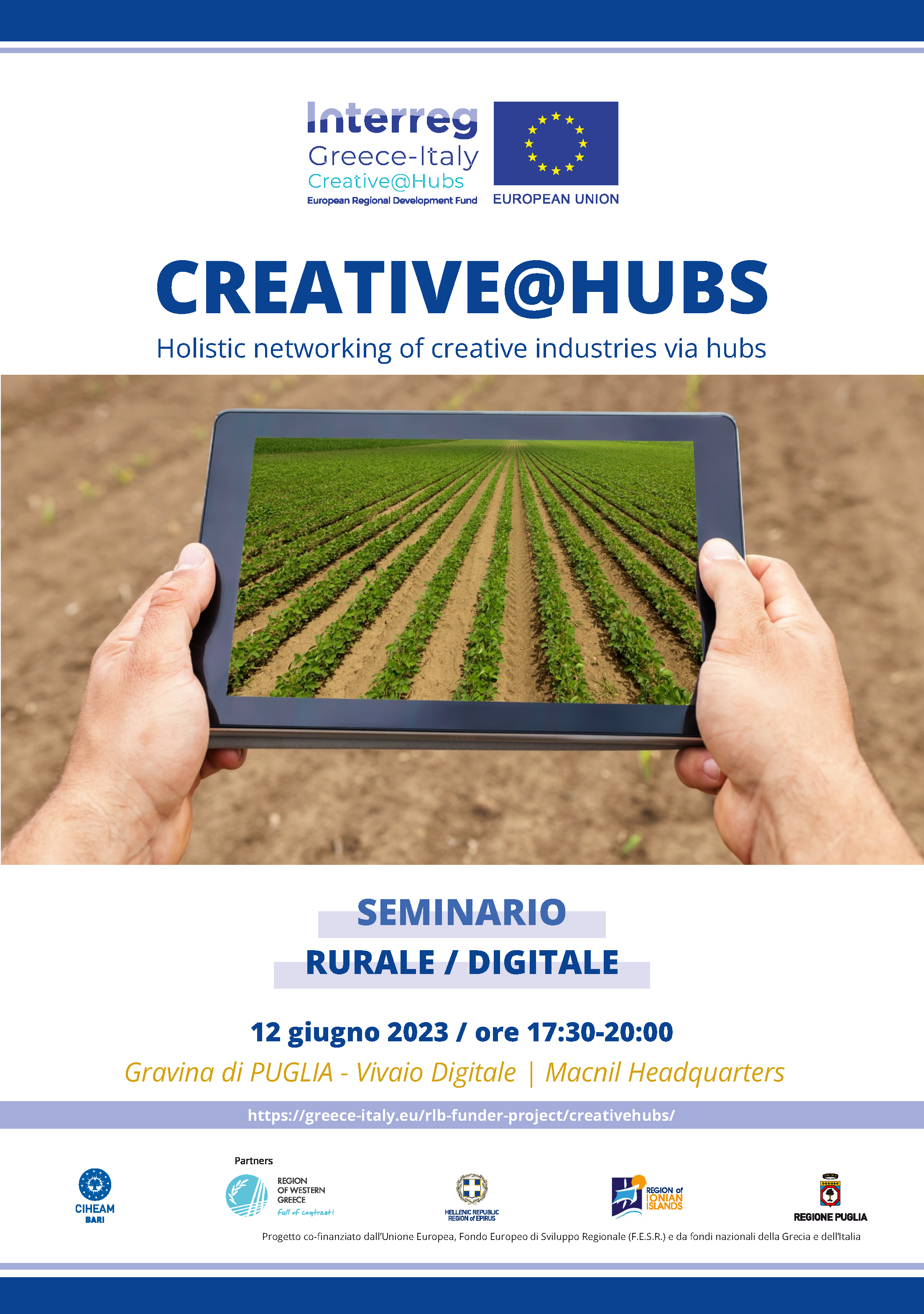
First of all, the Rural/Digital Seminar will be hosted on 12 June by Macnil's Digital Nursery in Gravina di Puglia, at 5.30 pm. The event will offer the opportunity to reflect on rurality and digitalisation in agriculture, with experts from CIHEAM Bari and Macnil, and the story telling of successful innovation in the rural world through the use of digital tools.
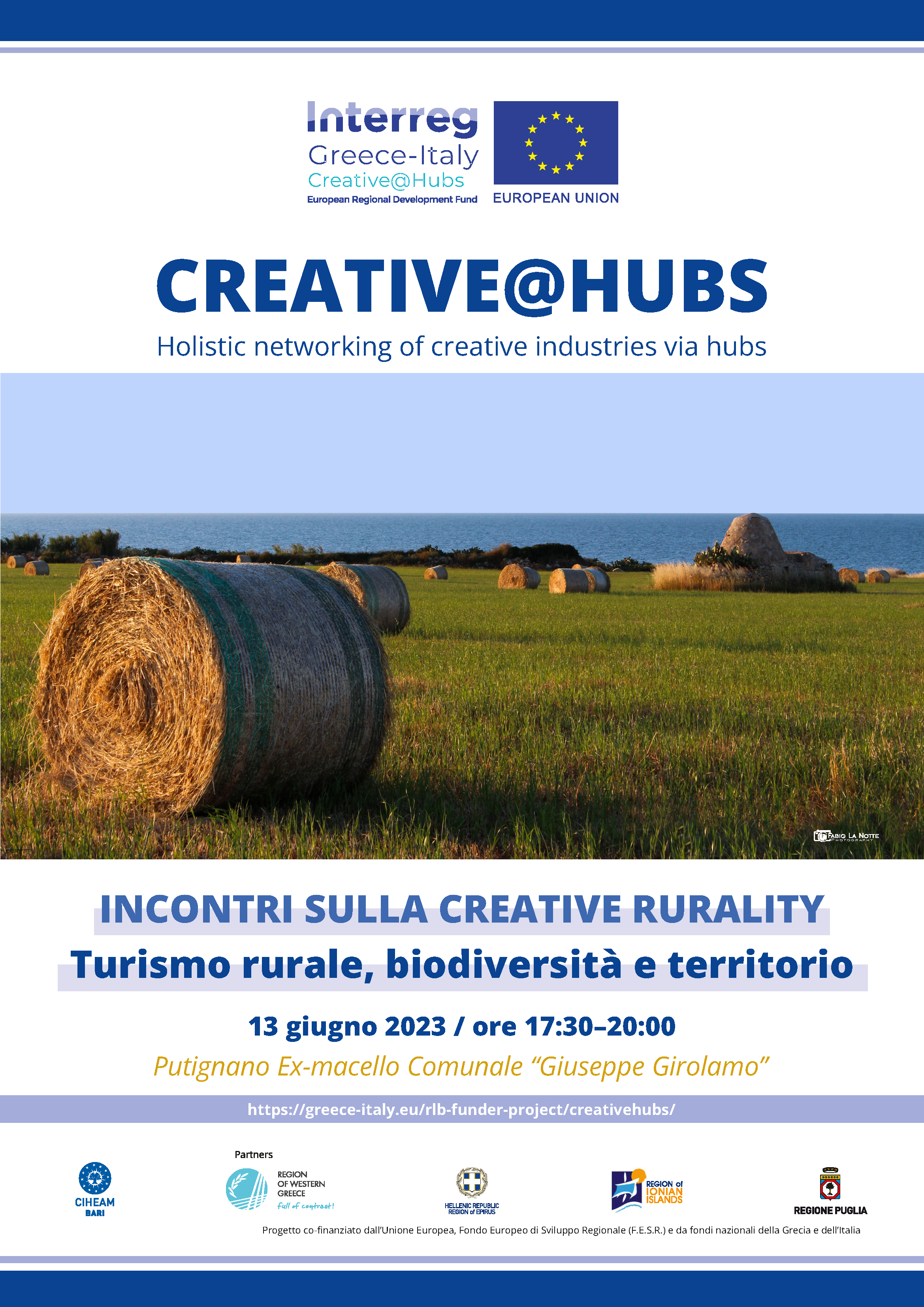
The second event, titled Rural Tourism, Biodiversity and Territory, will be held on 13 June in Putignano, in the former municipal slaughterhouse ‘Giuseppe Girolamo’ (at 5.30 pm) to discuss reforestation, landscape regeneration, biodiversity protection in rural tourism and enhancement of ancient fruit such as figs and pomegranates. Local food policies for spatial development will also be explored.
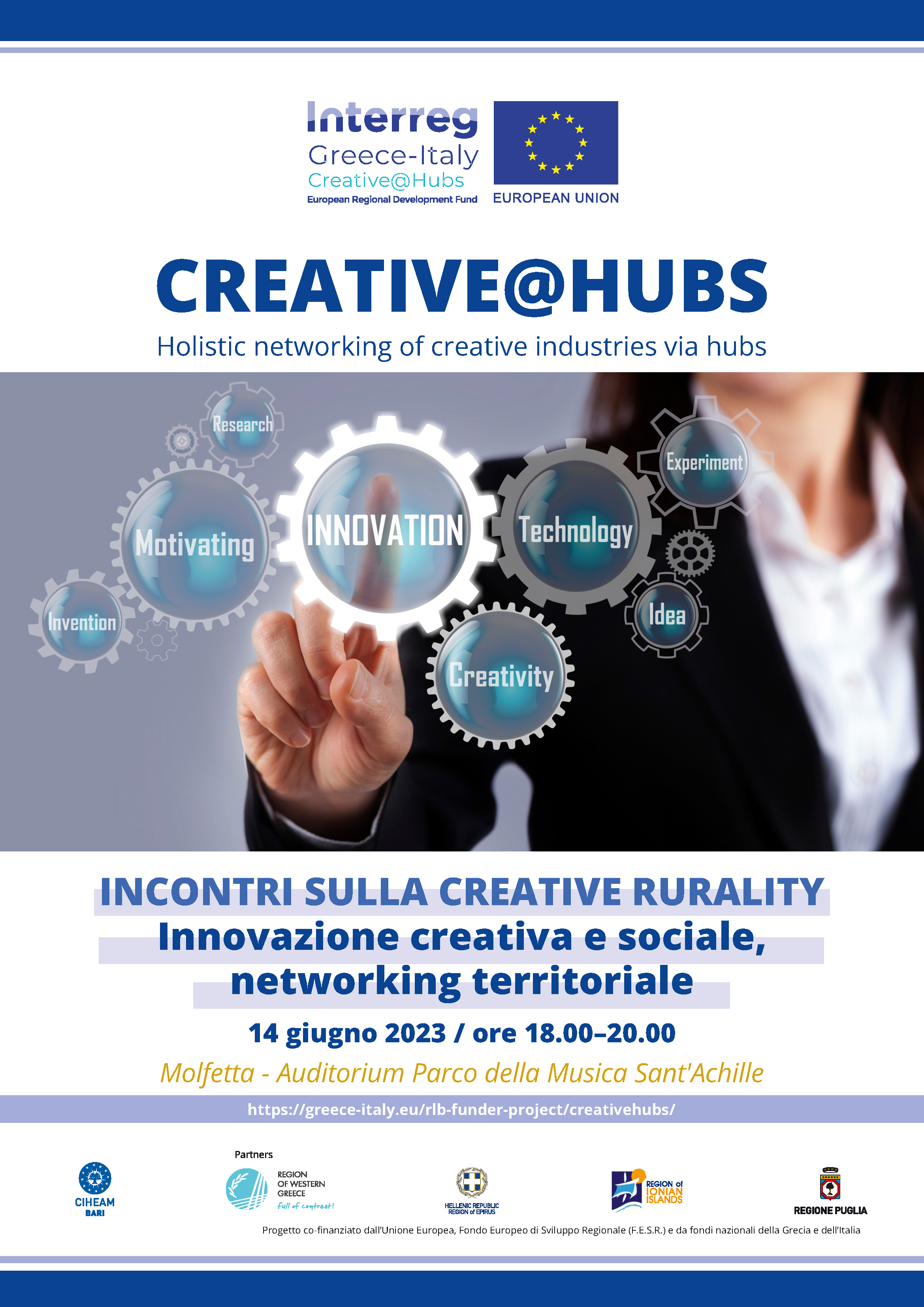
The third meeting on Innovation through Creativity, Social and Territorial Networking, will take place on 14 June in Molfetta's Auditorium Parco della Musica Sant'Achille, starting at 6 p.m. Speakers from different backgrounds will share success stories related to creativity, social and territorial networking in the context of innovation.
Il progetto CREATIVE@HUBS - Holistic networking of creative industries via hubs, promosso dal Programma di Cooperazione Interreg V-A Grecia-Italia, ha l'obiettivo di stimolare l'incontro tra industrie creative e settore agroalimentare, per favorire lo sviluppo di nuove idee e processi nell'ambito della Creative Rurality.
Le Industrie Creative rappresentano un settore dinamico che comprende imprese con il core business incentrato sulla capacità di creare. CREATIVE@HUBS sfrutta il processo intellettuale e sociale di questo settore per sviluppare nuove idee, processi e cluster in diverse aree tematiche e geografiche con particolare attenzione allo sviluppo delle aree rurali pugliesi.
Le attività del progetto si concentrano sulla creazione di tre hub di networking multidisciplinari in Puglia, che favoriscono la connessione tra il settore agrifood e quello creativo-culturale, con l'obiettivo di sviluppare tavoli permanenti di discussione e co-progettazione tra l'industria agroalimentare e l'industria creativa, al fine di definire linee guida sulla Creative Rurality come opzione per le politiche di sviluppo locale e modello internazionale per la rigenerazione rurale.
Nell'ambito di CREATIVE@HUBS, sono stati organizzati tre importanti incontri focalizzati sulla Creative Rurality.
Il primo, il Seminario Rurale/Digitale, si terrà il 12 giugno nel Vivaio Digitale di Macnil a Gravina di Puglia, alle ore 17.30. L'evento offre l'opportunità di riflettere sulla ruralità e la digitalizzazione nel contesto agricolo, con relatori del CIHEAM Bari, di Macnil e attraverso il racconto di casi di successo di innovazione del mondo rurale con l’ausilio degli strumenti digitali.
Il secondo evento, dal titolo Turismo Rurale, Biodiversità e Territorio, si terrà il 13 giugno a Putignano, nell'ex-macello comunale Giuseppe Girolamo (ore 17.30). L’incontro affronterà tematiche come rimboschimento, rigenerazione del paesaggio, tutela della biodiversità nel turismo rurale e valorizzazione di frutti antichi come i fichi e i melograni. Saranno esplorate anche le politiche locali del cibo per lo sviluppo territoriale.
Il terzo meeting, intitolato L'Innovazione tra Creatività, Sociale e Networking Territoriale, si svolgerà il 14 giugno nell'Auditorium Parco della Musica Sant'Achille di Molfetta, con inizio alle ore 18. Durante l'evento, relatori provenienti da diverse esperienze presenteranno casi di successo legati alla creatività, al sociale e al networking territoriale nel contesto dell'innovazione.
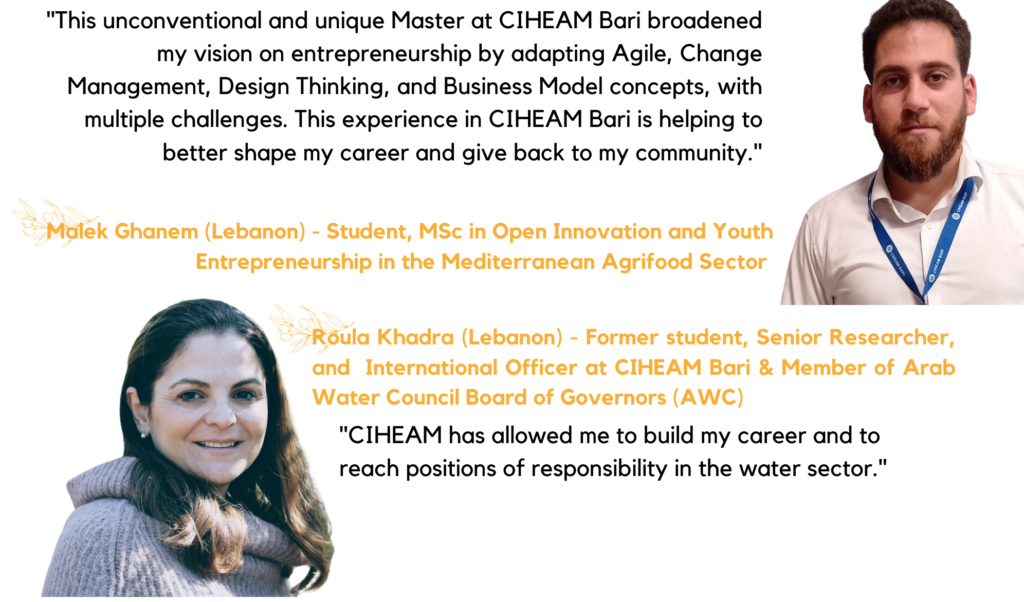
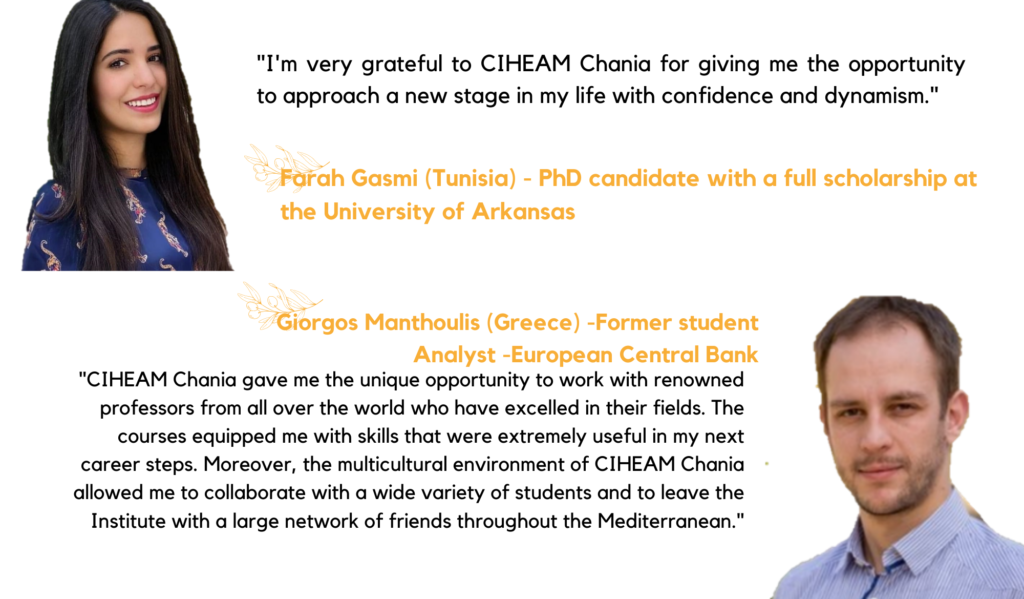
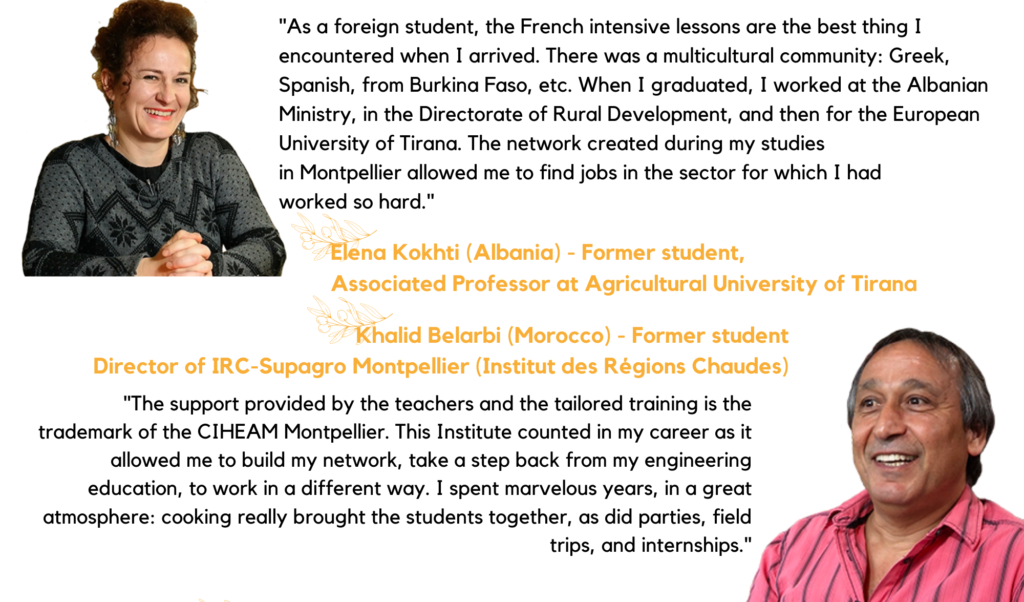
On 27 July 2023, the CIHEAM Chania Institute (Greece) will host the 3rd gathering of its ALUMNI. Building on the success of previous editions and the enthusiasm generated among the CIHEAM community, this year the gathering is open to all alumni from the 4 CIHEAM Institutes (Bari, Chania, Montpellier, and Zaragoza).
In a friendly and festive atmosphere, this event, which takes place on one of the most beautiful Greek islands, will be an opportunity to celebrate the diverse life paths of ALUMNI from all over the world, to initiate new synergies, and to reflect on high-impact projects for the members of the CIHEAM community, particularly the younger ones.
This event, which is intended to be a new stage in the strengthening of the CIHEAM ALUMNI network, will highlight a major common ambition, namely to empower and strengthen the position of young people in the Mediterranean.
The ALUMNI will share their experiences and exchange with current students to help them successfully plan the next steps in their professional and personal development.
CIHEAM Bari is pleased to announce the launch of the SEMINARS FOR HUB MANAGERS in the framework of the CREATIVE@HUBS "Holistic Networking of Creative Industries via Hubs" project, under the INTERREG V-A GREECE-ITALY Programme 2014-2020.
Ten participants from Italy and Greece and ten external 'trainees' from Mediterranean countries will be selected to acquire relevant knowledge and skills to organise, define and run a creative hub, providing services aligned to the needs and challenges of local entrepreneurs and innovators in the agri-food and creative sectors in Greece and Italy.
Participants will attend remotely taught training, in English, for a total duration of 12 hours. The course will be free of charge, as expenses are covered by the CREATIVE@HUBS project.
The course will be structured in four seminars as follows:
· 22 June (2pm – 5pm): Hub sustainability using The Three Buckets Strategy (Thomas Mancuso)
· 27 June (2pm – 5pm): Networking people in creative hubs (Mohamed Juneidi Abderrazak)
· 29 June (2pm – 5pm): Hub space development and utilization (Thomas Mancuso)
· 3 July (2pm – 5pm): Cross innovation (Mohamed Juneidi Abderrazak)
The application deadline is 15 June and all submission details and forms are available at the following link:
Find out more here: creativehubs@iamb.it
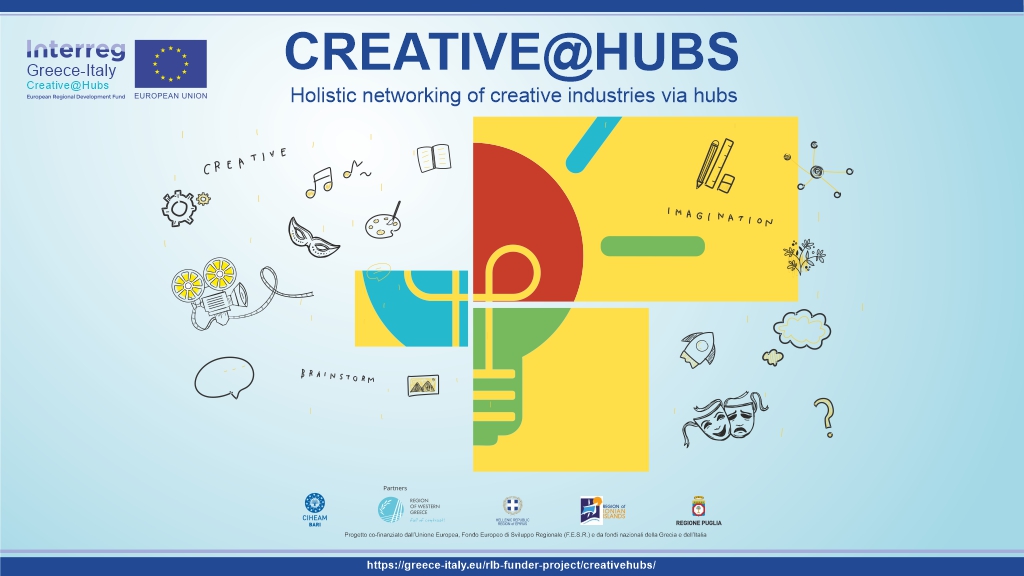
Il CIHEAM Bari è lieto di annunciare il lancio della serie di SEMINARI PER HUB MANAGER del progetto CREATIVE@HUBS "Holistic Networking of Creative Industries via Hubs", realizzato nell’ambito del programma INTERREG V-A GREECE-ITALY 2014-2020. Dieci partecipanti provenienti dall'Italia e dalla Grecia e dieci corsisti esterni provenienti da Paesi del Mediterraneo saranno selezionati per acquisire conoscenze e competenze rilevanti per organizzare, definire e gestire un hub creativo, fornendo servizi adeguati alle esigenze e alle sfide degli imprenditori e degli innovatori locali nel settore agroalimentare e in quello creativo, in Grecia e in Italia.
I partecipanti seguiranno la formazione da remoto, in lingua inglese, per una durata complessiva di 12 ore. Il corso sarà totalmente gratuito, grazie alla copertura dei costi da parte del progetto CREATIVE@HUBS.
Il corso sarà strutturato in una serie di quattro seminari:
· 22 June (ore 14 -17): Hub sustainability using The Three Buckets Strategy (Thomas Mancuso)
· 27 June (ore 14 -17): Networking people in creative hubs (Mohamed Juneidi Abderrazak)
· 29 June (ore 14 -17): Hub space development and utilization (Thomas Mancuso)
· 3 July (ore 14 -17): Cross innovation (Mohamed Juneidi Abderrazak)
Il termine per la presentazione delle domande è il 15 giugno e tutti i dettagli e la modulistica per la candidatura sono disponibili al seguente link:
Per info: creativehubs@iamb.it
On 26 to 27 May, the initiative titled ‘Insieme per gli SDG‘ (Together for SDGs) took place in Naples featuring Deputy Prime Minister and Minister of Foreign Affairs Antonio Tajani, Deputy Minister of Foreign Affairs and International Cooperation Edmondo Cirielli, Rector of the University of Naples Federico II and Agritech President Matteo Lorito and, via remote connection, Minister of University and Research Annamaria Bernini and Minister of Agriculture Francesco Lollobrigida.
The campaign was promoted by the Ministry of Foreign Affairs and International Cooperation with the support of FAO, UN SDG Action Campaign, the European Commission and Save the Children.
CIHEAM Bari, which for over sixty years has been engaged in promoting scientific diplomacy to support sustainable food development in the Mediterranean region, organised the event ‘Food policies for Mediterranean Cities' jointly with the Ministry of Foreign Affairs and International Cooperation, the Italian Agency for Development Cooperation, the City of Naples and Milan Urban Food Policy Pact (MUFPP).
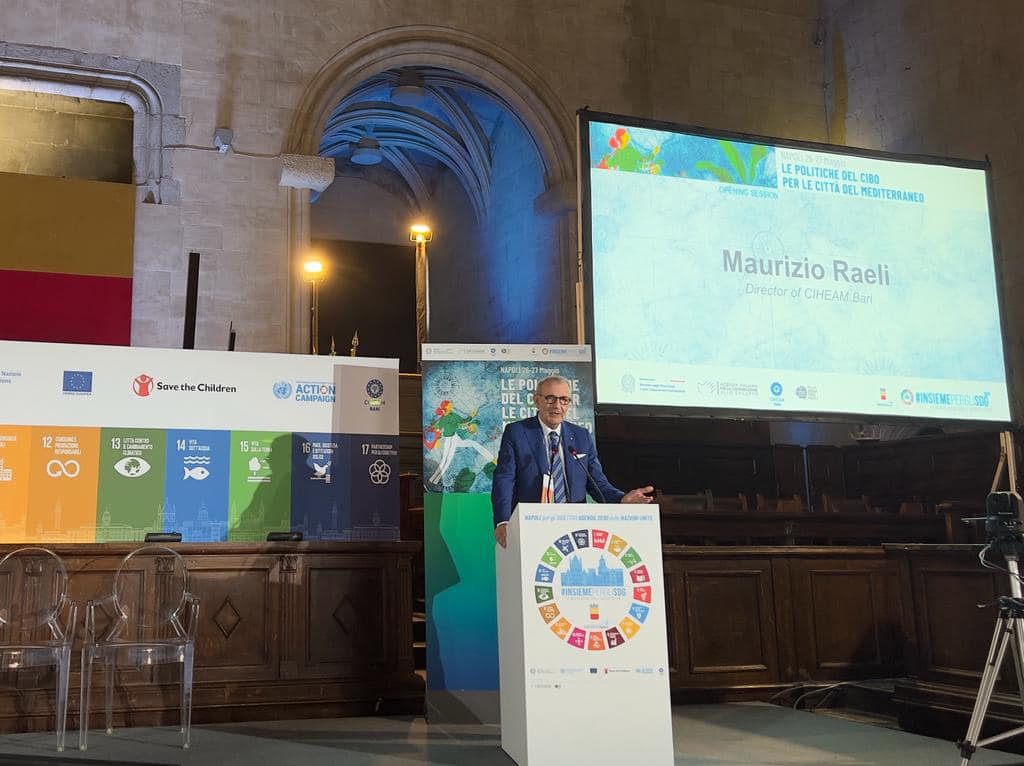
Addressing the conference at the opening session, CIHEAM Bari’s Director Maurizio Raeli highlighted the central role of food policies in the development of sustainable food systems acrossthe Mediterranean as a tool for interconnecting institutions, supply chain actors and citizens to promote a healthier diet, preserve ecosystems and ensure an equitable and inclusive socioeconomic development.
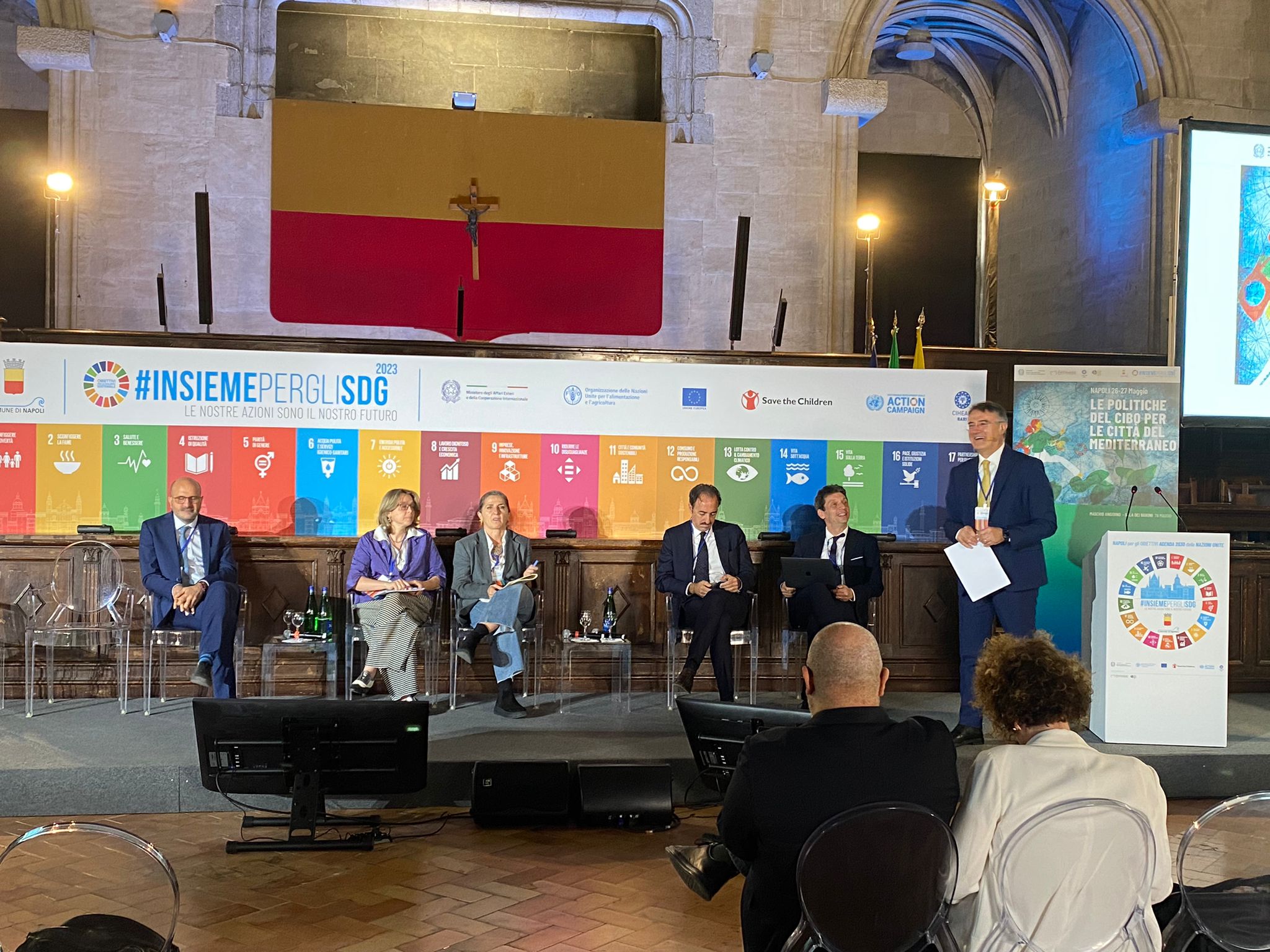
CIHEAM Bari also facilitated, with Deputy Director, Biagio Di Terlizzi, a debate with the mayors and high representatives of some Italian (Naples, Milan, Cremona, Pollica, Trieste, Bari) and Mediterranean cities (Tirana, Vlora, Tyre, Byblios, Medenine, Mersin, Yesenir) to identify needs and explore potentials for building partnerships, promoting urban food policies and interaction between rural and urban areas, through the exchange of experiences, knowledge and common issues, in order to identify and share innovative solutions focused on food transition.
The mayors of the Mediterranean cities discussed and emphasised the need to create professional profiles with management skills to formulate and implement local food policies and support local authorities in planning integrated and sustainable development.
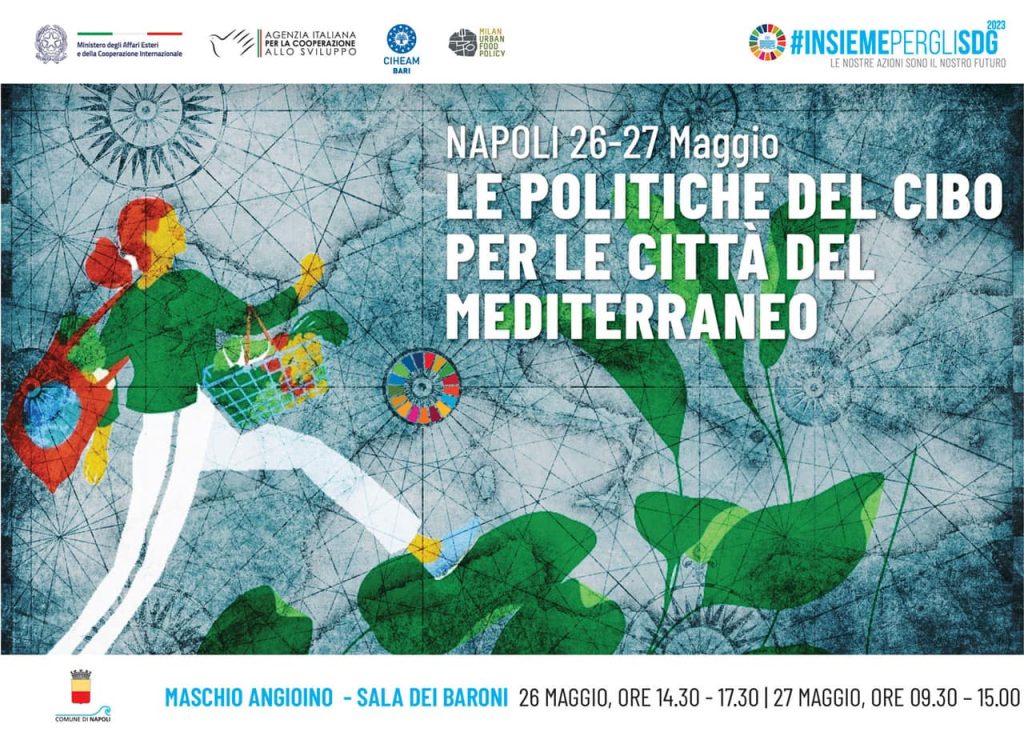
Il 26 e il 27 maggio scorsi si è tenuta a Napoli l’iniziativa “Insieme per gli SDG” alla presenza del Vicepresidente del Consiglio e Ministro per gli Affari Esteri Antonio Tajani, del Viceministro per gli Affari Esteri Edmondo Cirielli, del Rettore dell’Università degli studi di Napoli Federico II e Presidente Agritech Matteo Lorito e, in collegamento, del Ministro dell’Università e la ricerca Annamaria Bernini e del Ministro dell’Agricoltura Francesco Lollobrigida.
La campagna è stata promossa dal Ministero degli Affari Esteri e della Cooperazione Internazionale con il sostegno di FAO, UN SDG Action Campaign, Commissione Europea e Save the Children.
Il CIHEAM Bari, impegnato da più di sessant’anni nella promozione della diplomazia scientifica a favore dello 𝘀𝘃𝗶𝗹𝘂𝗽𝗽𝗼 𝗮𝗹𝗶𝗺𝗲𝗻𝘁𝗮𝗿𝗲 𝘀𝗼𝘀𝘁𝗲𝗻𝗶𝗯𝗶𝗹𝗲 nel Bacino del Mediterraneo, ha co-organizzato l’evento “𝗟𝗲 𝗣𝗼𝗹𝗶𝘁𝗶𝗰𝗵𝗲 𝗱𝗲𝗹 𝗖𝗶𝗯𝗼 𝗽𝗲𝗿 𝗹𝗲 𝗖𝗶𝘁𝘁𝗮̀ 𝗱𝗲𝗹 𝗠𝗲𝗱𝗶𝘁𝗲𝗿𝗿𝗮𝗻𝗲𝗼” unitamente al Ministero degli Affari Esteri e della Cooperazione Internazionale, all’Agenzia Italiana per la Cooperazione allo Sviluppo, al Comune di Napoli e al Milan Urban Food Policy Pact MUFPP.
Nella sessione di apertura, il Direttore del CIHEAM Bari, Maurizio Raeli, è intervenuto evidenziando il ruolo fondamentale delle politiche del cibo nello sviluppo di 𝘀𝗶𝘀𝘁𝗲𝗺𝗶 𝗮𝗹𝗶𝗺𝗲𝗻𝘁𝗮𝗿𝗶 𝘀𝗼𝘀𝘁𝗲𝗻𝗶𝗯𝗶𝗹𝗶 nel Mediterraneo come strumento di collegamento tra istituzioni, operatori della filiera e cittadini per promuovere un’alimentazione più sana, rispettare gli ecosistemi e garantire uno sviluppo socioeconomico equo e inclusivo.
Il CIHEAM Bari ha altresì animato, con il Direttore aggiunto, Biagio Di Terlizzi, un confronto tra sindaci e Alti rappresentanti di città Italiane (Napoli, Milano, Cremona, Pollica, Trieste, Bari) e mediterranee (Tirana, Valona, Tiro, Byblios, Medenine, Mersin, Yesenir) per rilevare esigenze e sviluppare potenzialità per la costruzione di partenariati, che promuovano politiche del cibo nelle città ed interazione tra le aree rurali e urbane, attraverso scambi di esperienze, conoscenze e problematiche comuni, al fine di identificare e condividere soluzioni innovative focalizzate sulla transizione alimentare.
I sindaci delle città mediterranee hanno discusso e rilevato la necessità di creare profili professionali di tipo manageriale per definire e implementare politiche locali del cibo, che avrebbero la funzione di supportare le amministrazioni nella pianificazione dello sviluppo integrato e sostenibile.
CIHEAM Bari’s Great Hall, 1st June 2023, 9.30 a.m.
With the digital market applied to the agri-food supply chain steadily growing, global agritech turnover is expected to reach $15 billion, although business up-take remains limited. The main challenges include lack of expertise and difficulties in finding professionals to support business design and digitalisation processes. It is estimated that by 2030 the European labour market will need at least 20 million ICT experts while only 9 million are available today (Eu Commission’s DESI 2022 Reports).
To meet the fast-growing demand of IT professionals by digital businesses in Puglia and across the regional cooperation area including Italy, Albania and Montenegro, CIHEAM Bari, Puglia’s IT Production District and Dhitech, have collaborated to develop an advanced training course on digital skills, which will be officially concluded on 1st June at 9.30 a.m. at Cosimo Lacirignola Campus.
An innovative training method, which has involved 30 young graduates from different fields (Economics, IT, Agrifood), 19 from Albania, 2 from Montenegro and 9 from Puglia and Molise, seeking to improve digital skills through open innovation design thinking and in close collaboration with17 Italian and 3 Albanian businesses to help the trainees develop innovative projects based on business needs.
The course was run as part of the Food4Health project, funded by the Interreg IPA Cbc Italy-Albania-Montenegro Programme and led by the Albanian Ministry of Agriculture.
This initiative, which is intended to be a model for launching Puglia as an international HUB on digital training applied to the green and blue economy, will also mark the signing of a cooperation agreement between CIHEAM Bari, Puglia’s IT Production District and Dhitech, with the aim to consolidate ongoing relations with Albania’s and Montenegro’s businesses and to include other southern Mediterranean and African countries.
The course's closing ceremony will be attended by Maurizio Raeli, Director of CIHEAM Bari, Carlo Batori, Minister Plenipotentiary of the Directorate General for Development Cooperation - Ministry of Foreign Affairs, Alessandro Delli Noci, Councillor for Economic Development of Puglia Region, Gianna Elisa Berlingerio, Director of the Regional Department of Economic Development, Salvatore Latronico, President of Puglia’s IT Production District and Angelo Corallo, President of DhiTech.
Teodoro Miano, Secretary General of CIHEAM, will deliver the concluding remarks while Damiano Petruzzella from CIHEAM Bari will moderate the meeting.
The six project works that have generated innovative solutions for business application will be showcased during the event.
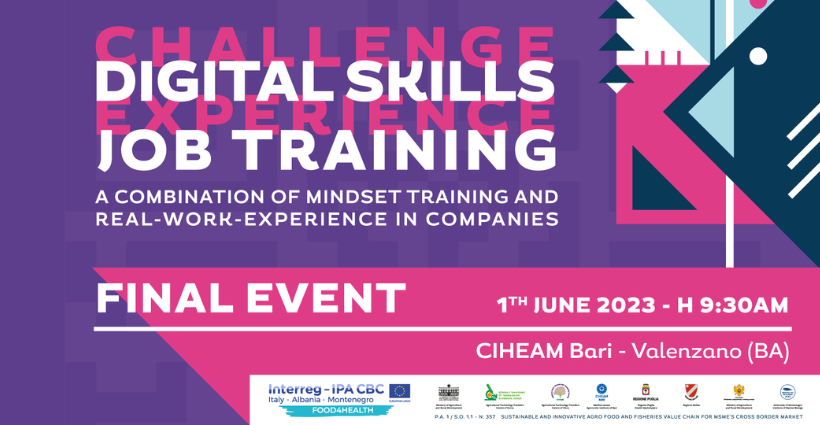
Aula Magna del CIHEAM Bari, 1 giugno 2023, ore 9.30
A fronte della continua crescita del mercato digitale applicato alla filiera agroalimentare, il fatturato mondiale dell'agritech è stimato intorno ai 15 miliardi di dollari, anche se l'adozione da parte delle aziende è ancora limitata. Tra le principali cause vi sono la mancanza di competenze qualificate e la difficoltà nel reperire profili professionali a supporto dei processi di progettazione e digitalizzazione delle imprese. Si stima, infatti, che entro il 2030 il mercato del lavoro europeo avrà bisogno di almeno 20 milioni di specialisti ICT; oggi non ne ha più di 9 milioni (Rapporto DESI 2022 Commissione UE).
Per far fronte alla crescente domanda di professionisti nel settore IT da parte delle aziende digitali pugliesi e dell’area di cooperazione territoriale che comprende Italia, Albania e Montenegro, il CIHEAM Bari, il Distretto Produttivo IT e quello tecnologico Dhitech, hanno collaborato per sviluppare un corso di alta formazione focalizzato sulle abilità digitali (digital skill), le cui conclusioni saranno presentate il prossimo 1 giugno, alle ore 9.30, nel Campus Cosimo Lacirignola.
Un metodo di formazione innovativo, intrapreso da 30 giovani: 19 provenienti dall’Albania, 2 dal Montenegro e 9 da Puglia e Molise, laureati in diverse discipline (Economia, IT, Agrifood), che ha posto l’obiettivo sul miglioramento delle competenze digitali, basandosi sul metodo d'apprendimento dell’open innovation design thinking, realizzato in stretta collaborazione con 17 imprese italiane e 3 albanesi, che hanno collaborato con i corsisti nello sviluppo di progetti innovativi basati sui bisogni aziendali.
Il corso si inserisce nell’ambito del progetto Food4Health, finanziato dal Programma Interreg IPA Cbc Italy–Albania–Montenegro con capofila il Ministero dell’Agricoltura albanese.
L’iniziativa, che intende essere un modello per lanciare la Puglia come HUB internazionale sulla formazione in campo digitale applicato alla green e blue economy, sarà l’occasione per firmare un accordo di collaborazione tra CIHEAM di Bari, Distretto Produttivo IT e Dhitech con l’auspicio non soltanto di poter dare continuità alle relazioni instaurate con il sistema imprenditoriale albanese e montenegrino, ma di poter integrare altri Paesi del sud del Mediterraneo e dell’Africa.
All’evento di chiusura del corso parteciperanno Maurizio Raeli, direttore del CIHEAM Bari, Carlo Batori, ministro plenipotenziario della Direzione generale per la cooperazione allo sviluppo del Ministero degli esteri, Alessandro Delli Noci, assessore allo sviluppo economico della Regione Puglia, Gianna Elisa Berlingerio, direttora del dipartimento regionale dello Sviluppo economico, Salvatore Latronico, presidente del Distretto Produttivo dell’Informatica Pugliese e Angelo Corallo, presidente del DhiTech.
Le conclusioni saranno affidate a Teodoro Miano, segretario generale del CIHEAM.
L’incontro sarà moderato da Damiano Petruzzella del CIHEAM Bari.
Durante il meeting saranno presentati i sei lavori che hanno generato altrettanti progetti di soluzioni innovative da applicare alle aziende.