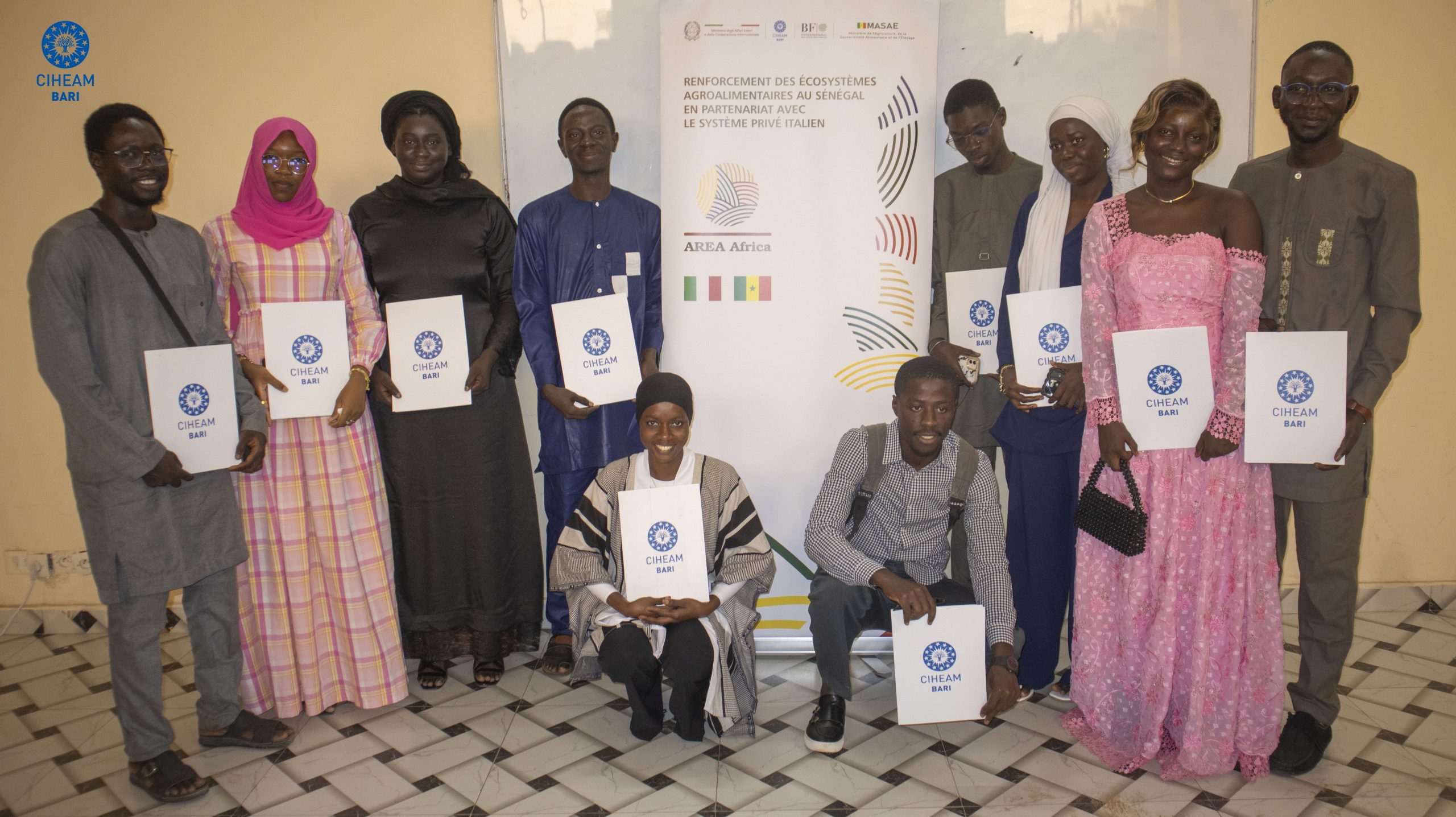
À Ziguinchor, la recherche n'est plus seulement une affaire de laboratoires. Elle devient un levier concret pour transformer l'agriculture, préserver l'environnement et préparer l'avenir du Sénégal. C'est le pari qu'a choisi de relever le projet AREA Africa Sénégal en lançant officiellement, ce 19 juin 2026, un ambitieux programme de bourses destinées 34 jeunes chercheurs de l'Université Assane Seck de Ziguinchor (UASZ).
Dans un contexte où les défis liés à la sécurité alimentaire, au changement climatique et à la gestion durable des ressources naturelles se font de plus en plus pressants, soutenir la recherche apparaît comme une nécessité stratégique. C'est précisément l'objectif du programme de bourses mis en place par le projet AREA Africa Sénégal, qui accompagnera pendant trois ans trente-quatre étudiants engagés dans des travaux de recherche à fort potentiel d'impact.
La cérémonie officielle de lancement du programme des bourses du projet AREA Africa Sénégal, organisée au sein de l'UASZ, a réuni responsables universitaires, enseignants-chercheurs, partenaires techniques et institutionnels, étudiants et représentants du CIHEAM Bari. Au-delà du caractère protocolaire de l'événement, le message était clair : l'avenir de l'agriculture et du développement durable sénégalais se construit aussi sur les bancs de l'université.
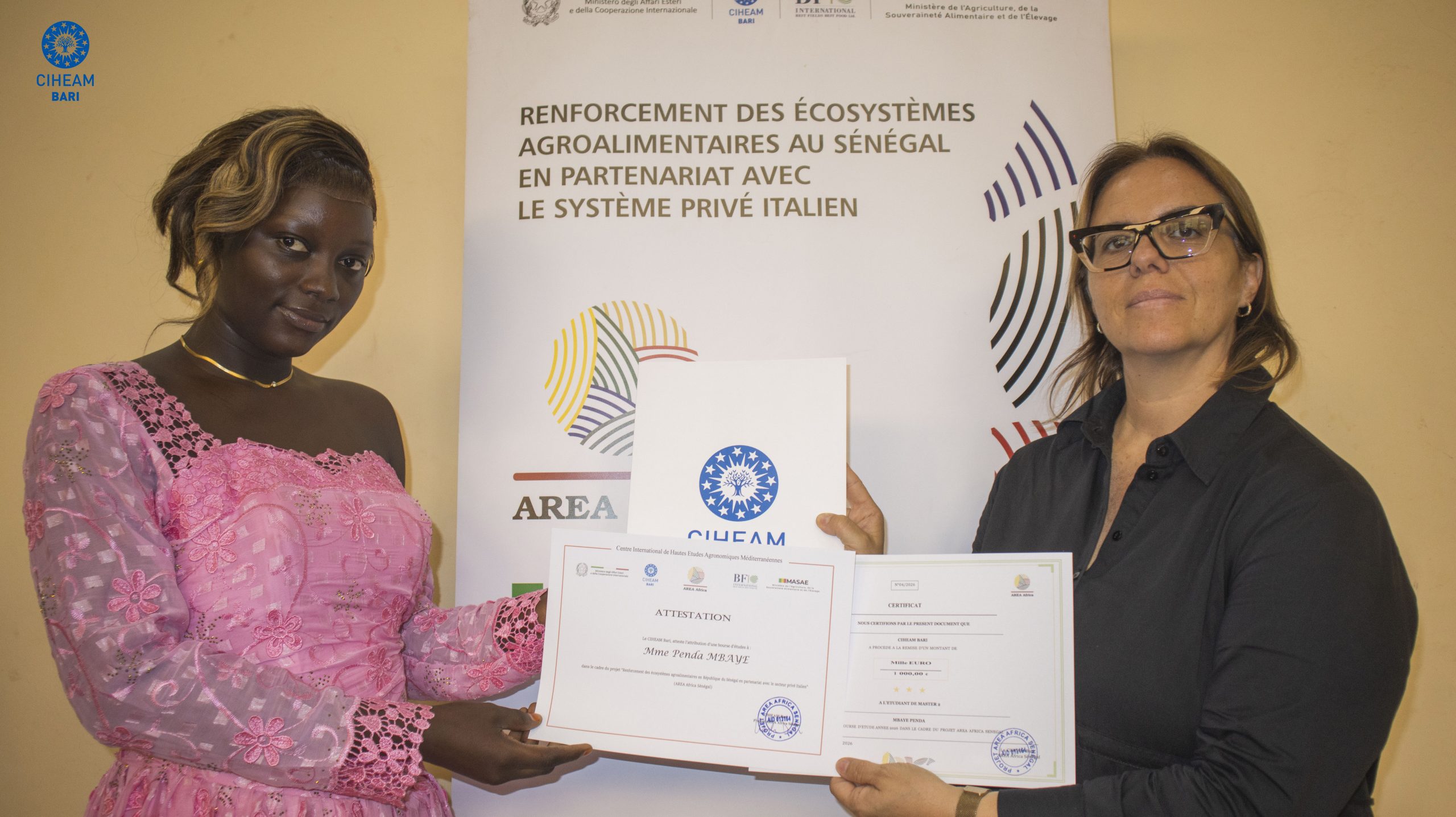
Le moment le plus symbolique de la rencontre a sans conteste été la remise des attestations de bourse aux dix premiers bénéficiaires du programme. Dix étudiants, dix parcours, mais une même ambition : produire des connaissances capables de répondre aux préoccupations réelles des communautés et des territoires.
Pour ces jeunes chercheurs, cette bourse représente bien plus qu'un appui financier. Elle constitue une reconnaissance de leur engagement académique et une opportunité de mener des travaux de qualité dans des domaines cruciaux pour le pays. Agriculture résiliente, gestion des ressources naturelles, adaptation aux changements climatiques ou encore innovation agroalimentaire : autant de sujets sur lesquels leurs recherches pourraient demain influencer les politiques publiques et les pratiques de terrain.
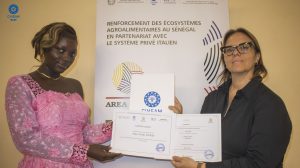
À travers cette initiative, AREA Africa Sénégal entend également rapprocher davantage le monde universitaire des acteurs économiques et du secteur agricole. Les échanges qui ont marqué la cérémonie ont permis de mettre en lumière la nécessité de renforcer les passerelles entre la recherche, l'innovation et les besoins des producteurs. « Investir dans la jeunesse scientifique aujourd'hui, pour trouver les solutions de demain », semblait être le fil conducteur de cette rencontre qui a également bénéficié de la participation d'une délégation de la World Farmers Markets Coalition (WFMC).
Le programme s'inscrit dans le cadre de l'initiative italienne de coopération internationale, développée au sein d'un partenariat public-privé équilibré dans le cadre du Plan Mattei pour l'Afrique. Il s'inscrit spécifiquement dans le cadre de l'Action pour le renforcement des écosystèmes agroalimentaires en Afrique (AREA), cofinancée par le Ministère des Affaires étrangères et de la Coopération internationale (MAECI), avec le CIHEAM Bari comme partenaire de connaissance et organisme de mise en œuvre pour la composante publique, et le BFI comme partenaire privé.
Au-delà des dix premiers boursiers, c'est toute une vision qui est lancée. Celle d'un Sénégal où la recherche universitaire contribue directement à relever les défis du développement durable, où les jeunes talents trouvent les moyens d'exprimer leur potentiel et où les innovations produites localement participent à la transformation des territoires.
À Ziguinchor, le message est désormais lancé : la relève scientifique est en marche !!!
The PROTECHMED project works to strengthen innovation in Mediterranean protected horticulture by supporting the co-design and testing of eco-innovative solutions for greenhouse production, with a particular focus on water efficiency, energy saving, digital agriculture, and sustainable production systems.
Bringing together partners and stakeholders from Greece, Italy, Malta, Tunisia, Lebanon, and Türkiye, the project aims to bridge the gap between research, technology providers, agricultural companies, and local innovation ecosystems. Its activities support the development of practical solutions for Mediterranean horticultural SMEs, including smart monitoring tools, decision-support systems, renewable energy integration, and improved resource management.
Within this framework, the Transnational Exchange in Sicily, organized by SVIMED, represented an important milestone for the project. The event built on previous technical activities coordinated by CIHEAM Bari, including the preparation of a repository of Best Management Practices collected across partner countries and the development of a Gap Analysis and State of Play on the protected horticulture sector in the Mediterranean. These preparatory steps helped identify relevant practices, innovation needs, and technical challenges to be addressed through future pilot actions.
During the exchange, partners, companies, researchers, and stakeholders took part in field visits and technical discussions focused on innovation in greenhouse production. Visits to MONCADA OP, CAUSARANO Farm, ISOLA GRANDE, REGRAN, and ALBA BIO O.P. offered concrete examples of how research, technology, and sustainability can be integrated into Mediterranean agriculture.
Participants observed practical applications related to soilless cultivation, hydroponic and aeroponic systems, sensors based systems, agrivoltaics, water management solutions, environmental control, integrated pest management, circular economy approaches, and digital platforms for remote technical assistance.
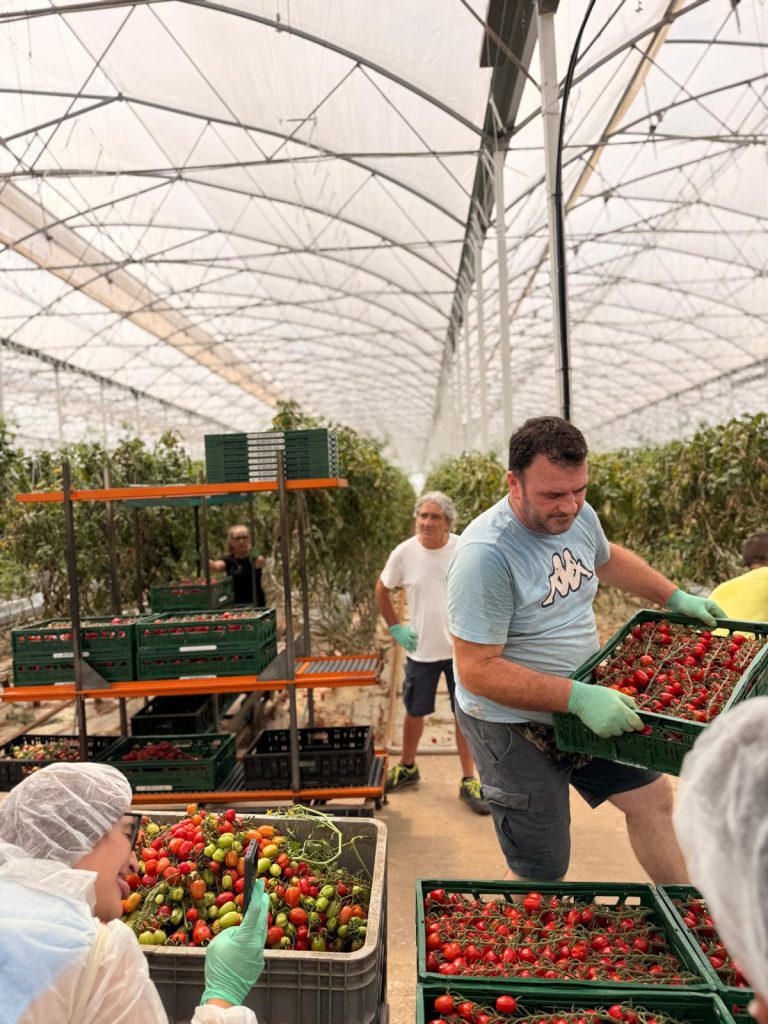
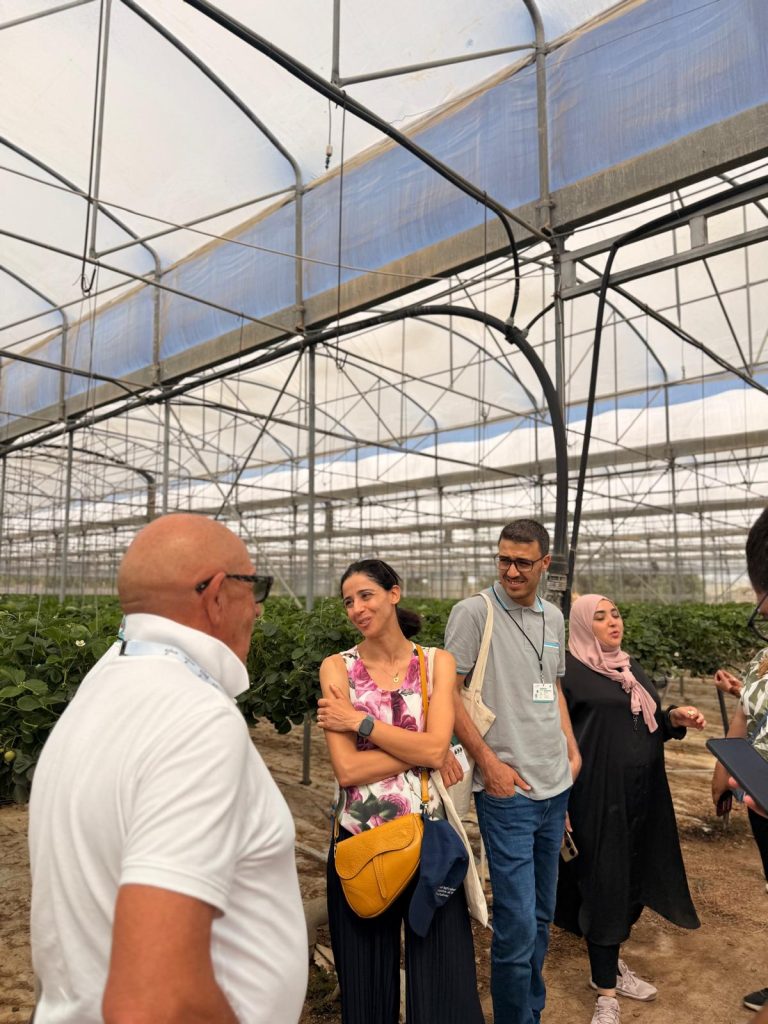
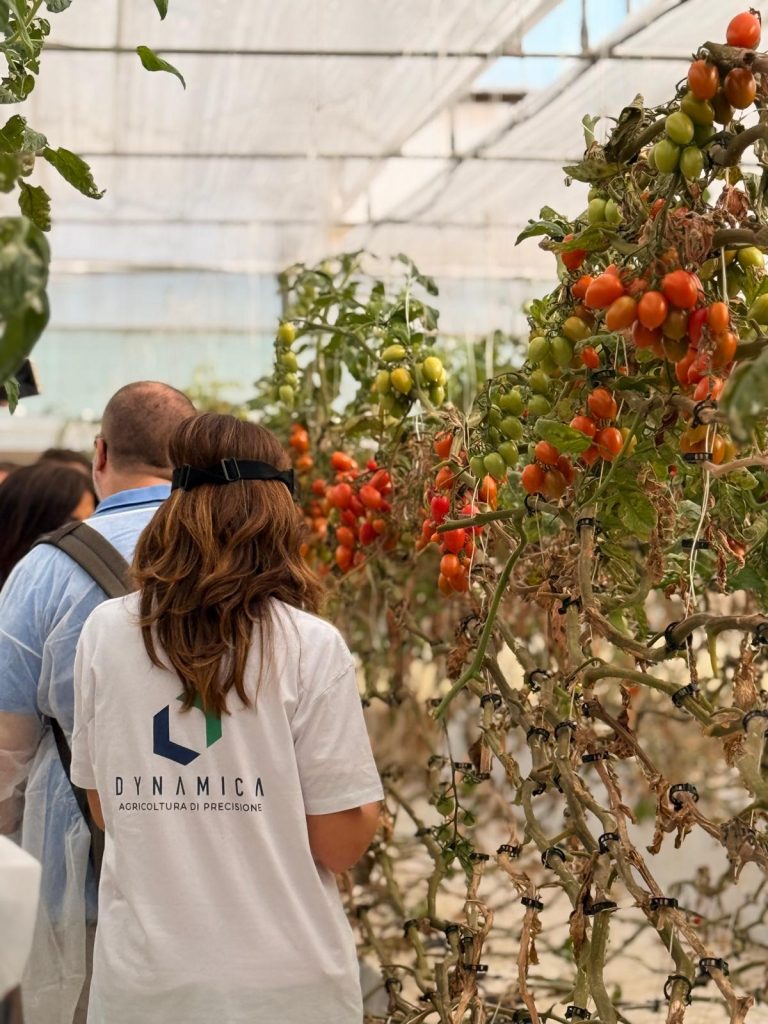
The event also provided space for exchange between project partners and the private sector. Through B2B corners and stakeholder sessions, participants had the opportunity to discuss technical needs, cooperation opportunities, and innovative business models. Among the companies contributing to the exchange, Fratelli Facchini Farm and Sysman, from the Puglia region, shared practical experiences and solutions connected to innovation in the agricultural sector.
A key output of the Transnational Exchange was the collaborative co-design process carried out during the final workshop. Participants worked in dedicated technical groups to develop preliminary executive blueprints for pilot actions in Sicily (Italy), Greece, Türkiye, Lebanon, and Tunisia. These discussions addressed solutions such as remote assistance, smart monitoring systems, sensors, digital Decision Support Systems, vertical farming, NFT systems, organic production, and improved water resource management.
The exchange also benefited from the contribution of colleagues from the BIOGREENET project — Boosting Innovation in Organic GREENhouses via stronger NETworks — a European initiative dedicated to strengthening organic greenhouse production through knowledge sharing, best-practice dissemination, digital tools, and stakeholder collaboration. This contribution reinforced synergies between the two project communities and supported the development of a broader Mediterranean network for innovation in protected cultivation.
Overall, the Transnational Exchange in Sicily contributed to the validation of best practices, the identification of innovation needs, and the definition of practical directions for future pilot actions. It strengthened cooperation across both shores of the Mediterranean and confirmed the importance of connecting research, enterprises, and local stakeholders to support a more sustainable and competitive horticultural sector.
Through PROTECHMED, Mediterranean partners continue working together to transform cooperation into practical solutions for the future of protected agriculture.
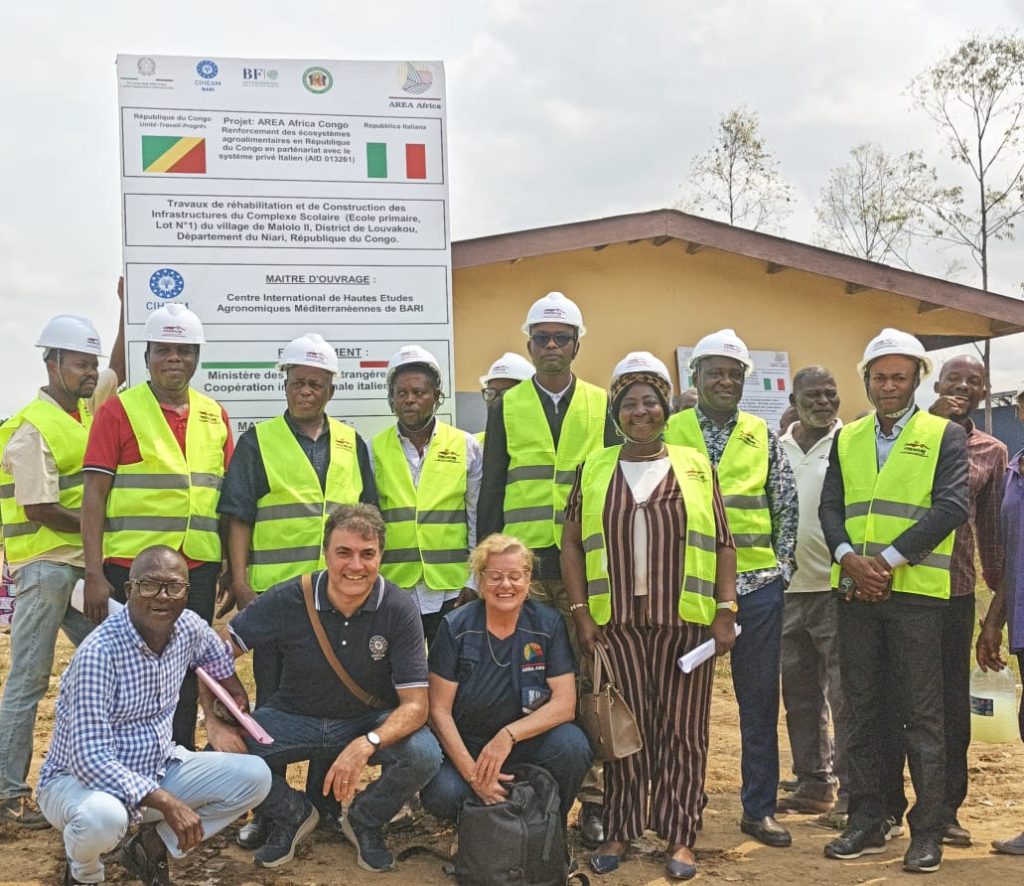
À Malolo II, en République du Congo, le 27 mai 2026, la pose de la première pierre marque le début de quelque chose qui va bien au-delà d’un simple chantier. C’est le début d’un parcours construit main dans la main avec la population locale, où l’école, la santé et les infrastructures deviennent des outils concrets de croissance et d’avenir.
Avec la cérémonie d’ouverture des travaux de rénovation de l’école publique du village, le CIHEAM Bari lance officiellement le volet infrastructurel du projet AREA Africa République du Congo, dans le but de renforcer les services essentiels et d’améliorer la qualité de vie de la communauté.
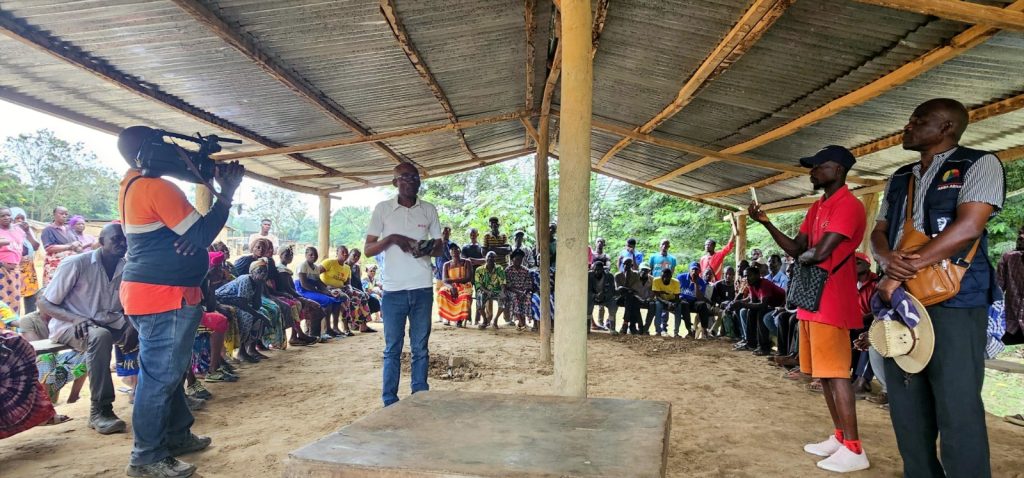
Aux côtés des autorités congolaises, des habitants de Malolo II et des partenaires du projet, Enrico Azzone, coordinateur du programme AREA Africa, et Clelia Moroni, chef de projet en République du Congo, ont passé une journée à écouter et à échanger avec la population, en présentant les activités déjà réalisées et les prochaines interventions prévues sur le territoire.
Lors de la cérémonie, les représentants de la communauté locale ont qualifié le début des travaux de « moment d’espoir et de fierté », capable de transformer « le rêve de la population en réalité », soulignant la valeur que la rénovation de l’école et des services essentiels représente pour les familles du village.
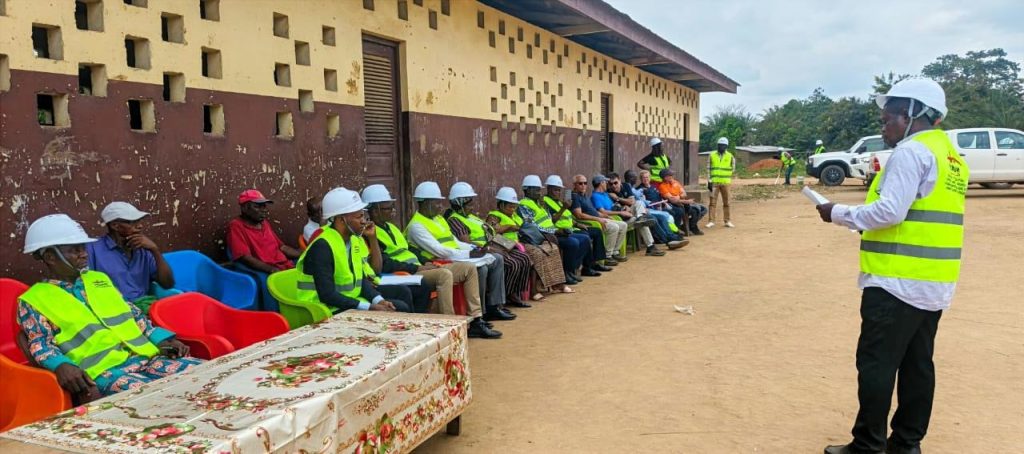
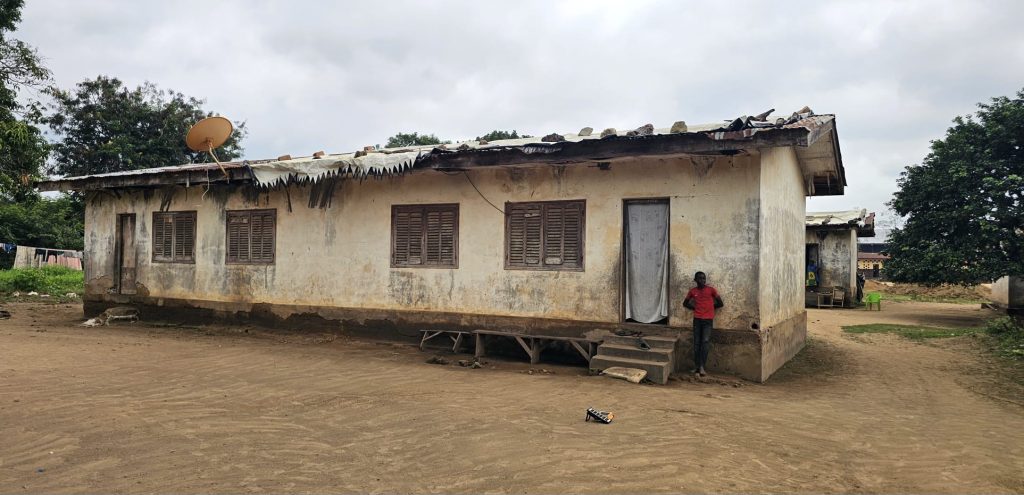
Le projet prévoit la rénovation des bâtiments scolaires, des blocs administratifs, des logements et des sanitaires destinés aux élèves, contribuant ainsi à créer des espaces plus sûrs et plus dignes pour les enfants, les enseignants et les familles. Parallèlement, des interventions seront menées au poste de santé du village, renforçant ainsi l’accès aux services de santé de base.
« Chaque infrastructure construite ou rénovée représente bien plus qu’un simple bâtiment : elle est synonyme d’accès à l’éducation, à des services essentiels et à de nouvelles opportunités pour les générations futures », ont souligné nos coordinateurs lors de la rencontre avec la population, en mettant en avant l’engagement des enseignants et du personnel de santé.
Au cours de la cérémonie, les autorités locales ont également remercié « la Coopération italienne et le CIHEAM Bari d'être aux côtés de la communauté au cours des prochains mois pour la réussite de ce travail », reconnaissant la valeur de la collaboration établie autour du projet.
Parallèlement, notre partenaire, la Fondation AVSI, lancera une démarche opérationnelle visant à renforcer les réseaux territoriaux. Elle favorisera des parcours participatifs liés à la sécurité alimentaire, à la formation de groupes agro-pastoraux et au développement durable des filières locales, en adoptant une approche fondée sur l’écoute et l’implication directe de la population.
La visite a également été un moment symbolique d'échange entre les institutions, les partenaires et les habitants du village, qui ont pu discuter de leurs attentes, de leurs priorités et de leurs perspectives d'avenir.
Les travaux de rénovation dureront environ quatre mois et s’achèveront d’ici octobre, avec pour objectif de restituer aux élèves une école rénovée à la rentrée et d’offrir à la communauté des services de santé plus accessibles et plus efficaces. Dans des contextes où les infrastructures, l'éducation et les soins de santé sont des outils fondamentaux du développement, chaque chantier ouvert devient également un investissement concret pour l'avenir des nouvelles générations.
Le projet « AREA Africa République du Congo » s’inscrit dans le cadre de l’initiative italienne de coopération internationale, développé au sein d’un partenariat public-privé équilibré dans le cadre du Plan Mattei pour l’Afrique.
Il s'inscrit spécifiquement dans le cadre de l'Action pour le renforcement des écosystèmes agroalimentaires en Afrique (#AREA), cofinancé par le Ministère des Affaires étrangères et de la Coopération internationale (#MAECI), avec le CIHEAM Bari comme partenaire de connaissance et organisme de mise en œuvre pour la composante publique, et le BFI comme partenaire privé.
From 11 to 13 May 2026, CIHEAM Bari participated in the “Study Visit to the Barcelona Living Lab”, organised within the framework of the FutureFoodS Partnership in Spain. The initiative, entitled “Transition Design for Complex and Persistent Problems of the Food System: the Case of Food Environment Transformation”, brought together around 50 participants representing a wide range of European stakeholders, including Living Lab facilitators, academics, researchers, innovators, public authorities, civil society organisations, and agrifood actors committed to the transformation of sustainable food systems.
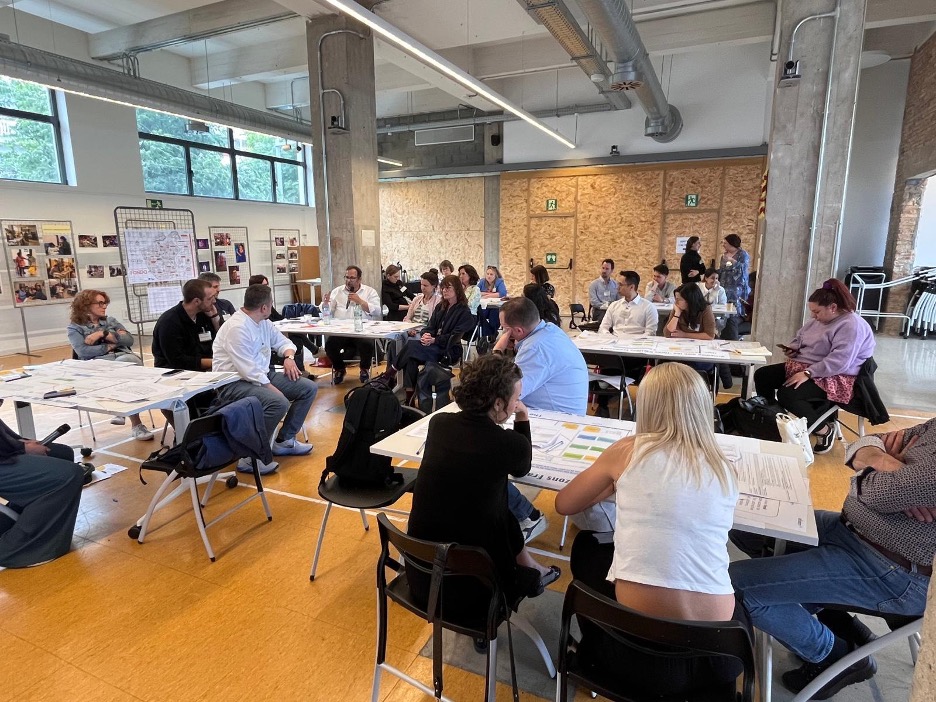
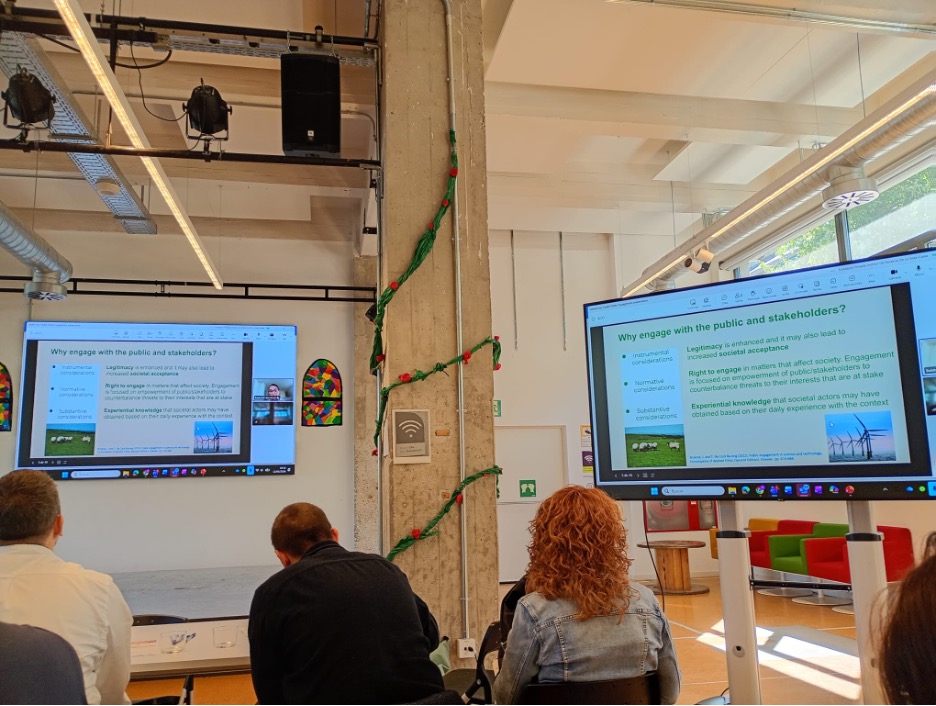
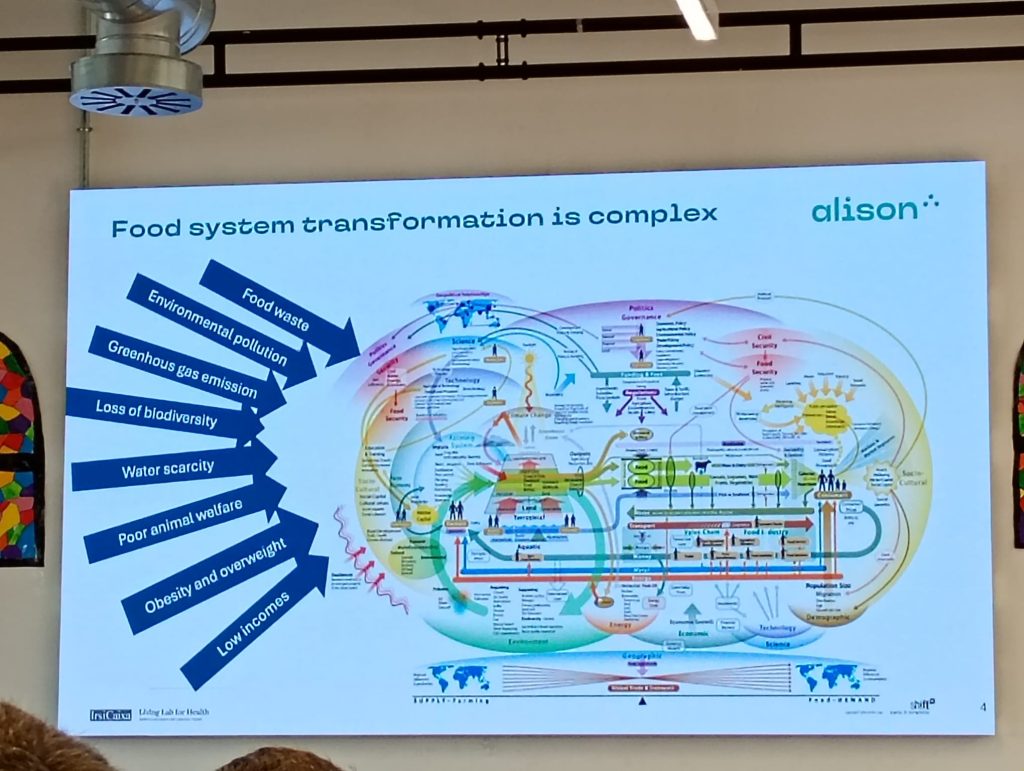
As a partner of Work Package 6 (WP6) and leader of Task 6.5 on Living Labs networking and stakeholder engagement, CIHEAM Bari, represented by Dr Noureddin Driouech, actively contributed to peer-learning and exchange activities aimed at strengthening participatory approaches and collaborative innovation for sustainable food systems transitions.
Hosted by the Living Lab for Health at IrsiCaixa, the study visit offered an immersive and hands-on learning experience focused on how systems thinking, community-based participatory research, and transition design can support collaborative experimentation and policy innovation in food systems.
Participants explored a real-life case study on food environment transformation in vulnerable neighbourhoods of Barcelona, co-creating reflections on barriers, opportunities, governance mechanisms, and strategies for systemic change. The initiative highlighted how pilot actions, multi-stakeholder collaboration, and transition roadmaps can generate sustainable and long-term impact across different levels of governance.
The programme included interactive workshops on the “Three Horizons Framework”, transition design methodologies, policy co-design, and field visits to community-based food initiatives in the Fondo neighbourhood of Santa Coloma de Gramenet.
A central component of the study visit was the presentation of the Barcelona Living Lab ecosystem, where a vibrant Community of Practice involving more than 100 organisations is already advancing food system transformation through collaborative and systemic approaches. The initiative is supported by several EU-funded projects, including FoodCLIC, FOSTER, and CLEVERFOOD, in synergy with the FutureFoodS Partnership.
CIHEAM Bari’s participation further reinforced its commitment to promoting Living Labs methodologies, stakeholder engagement, and innovation ecosystems across the Mediterranean and Europe. Through its leadership, CIHEAM Bari contributes to the development ofcollaborative learning environments capable of connecting research, policy, local communities, and innovation actors to foster more resilient, inclusive, and sustainable food systems.
The study visit also created opportunities for networking, peer exchange, and mutual learning among European stakeholders, while encouraging reflection on how these participatory approaches can be replicated and adapted to address other persistent challenges affecting food systems across Europe and the Mediterranean region.
Learn more about the FutureFoodS Partnership: https://www.futurefoodspartnership.eu/
Within the framework of the AREA Africa Programme, CIHEAM Bari continues to invest in capacity building as a strategic driver for more resilient, sustainable and innovation-oriented agri-food systems.
A new Training of Trainers (ToT) initiative brings together professionals from Ghana, the Republic of Congo and Senegal for an intensive learning experience focused on integrated management of vegetable and fruit crops.
The programme reflects a broader vision that goes beyond technical transfer: building national networks of qualified trainers capable of multiplying knowledge, supporting local institutions and accompanying farmers towards more sustainable agricultural practices.
Participants — including extension officers, technical trainers, ministry representatives and rural development professionals — engage in a dynamic path combining advanced theoretical sessions, field practice and study visits across Apulia and Basilicata. From onion cultivation fields in Acquaviva delle Fonti to open-field and greenhouse vegetable production systems in Monopoli, including visits to Azienda Lisi and Ortofrutticola Egnathia, the initiative offers direct exposure to innovative cultivation techniques and integrated phytosanitary management strategies.
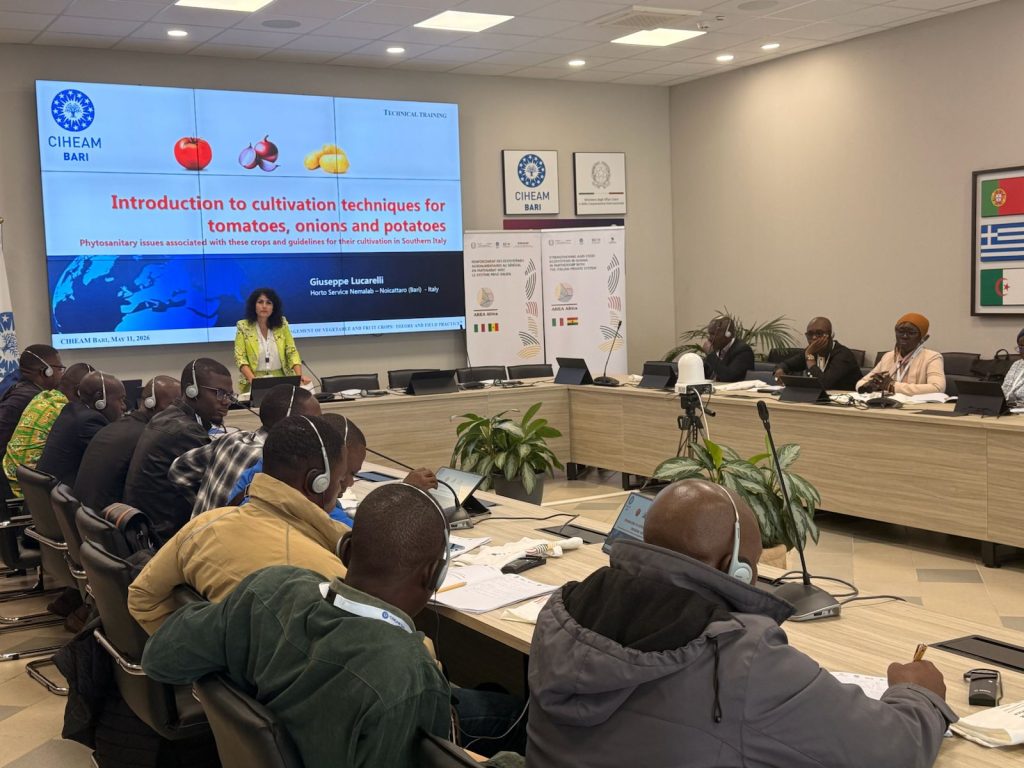
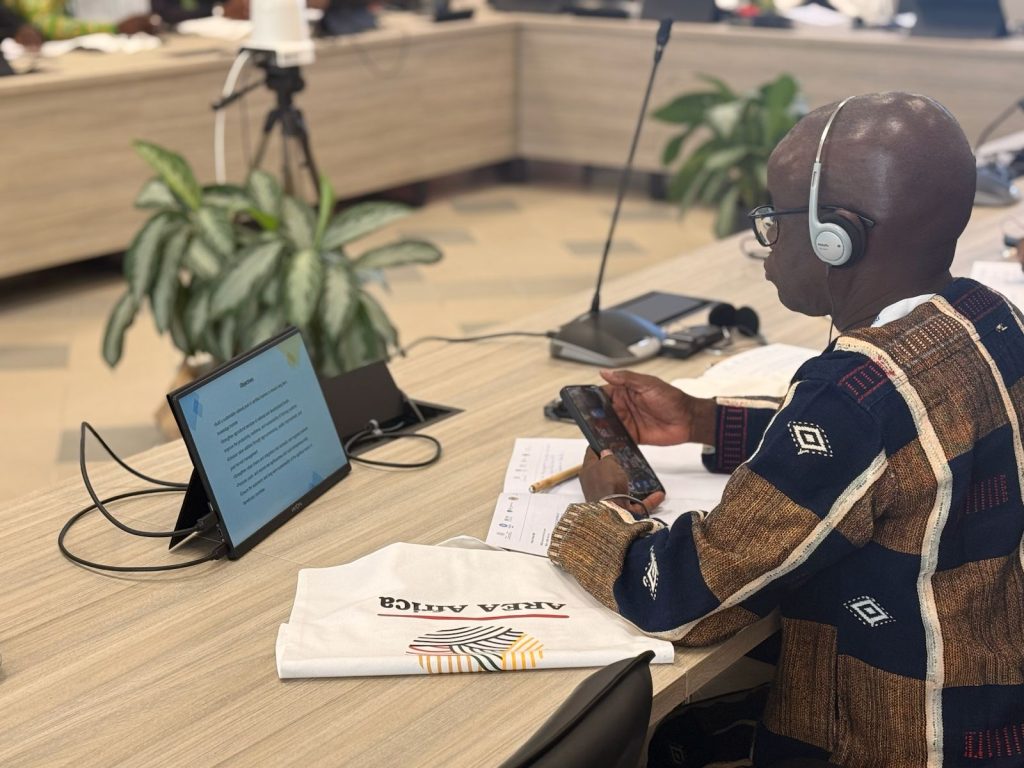
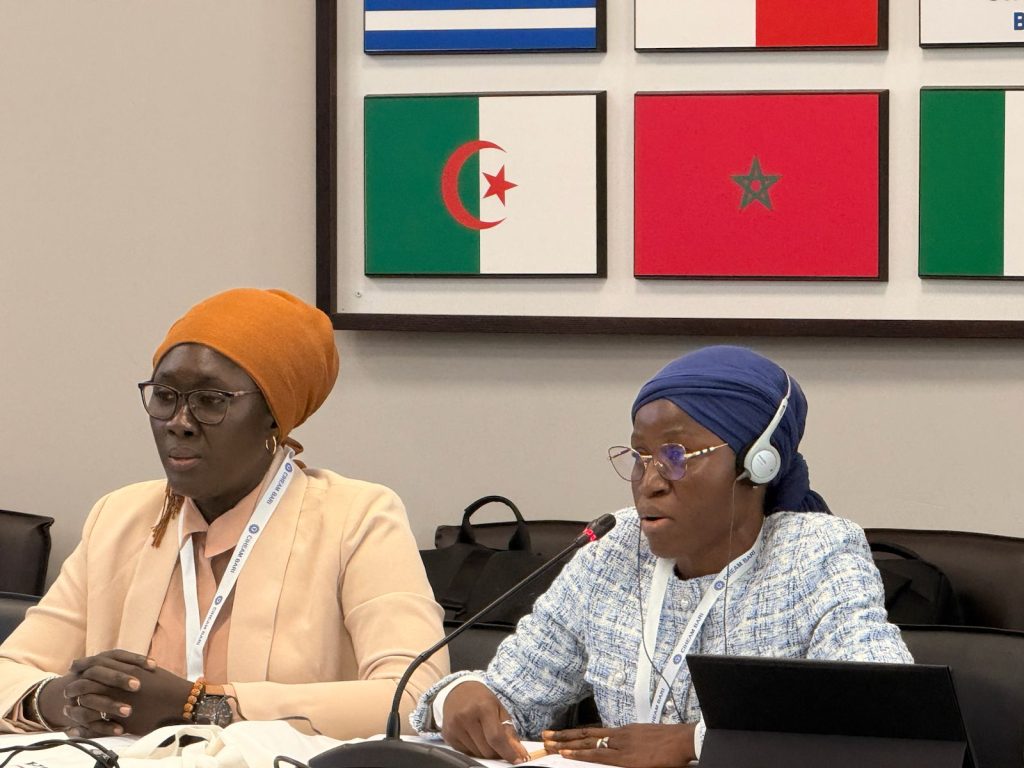
The programme also includes visits to citrus and mango orchards and to the Agrobios Research Centre in Metaponto, where participants explore applied research activities and sustainable crop protection approaches, as well as a field experience at Riso Magisa in Villapiana focused on rice cultivation systems.
These activities create valuable opportunities for dialogue between African and Italian expertise, encouraging participants to analyse practices, exchange experiences and reflect on how these approaches can be adapted within their own national contexts.
At the core of the initiative lies a multiplier approach: strengthening not only technical competencies, but also pedagogical and coordination capacities. The long-term objective is to establish operational local training systems, certified national teams of trainers and structured mentoring pathways capable of generating impact far beyond the duration of the programme.

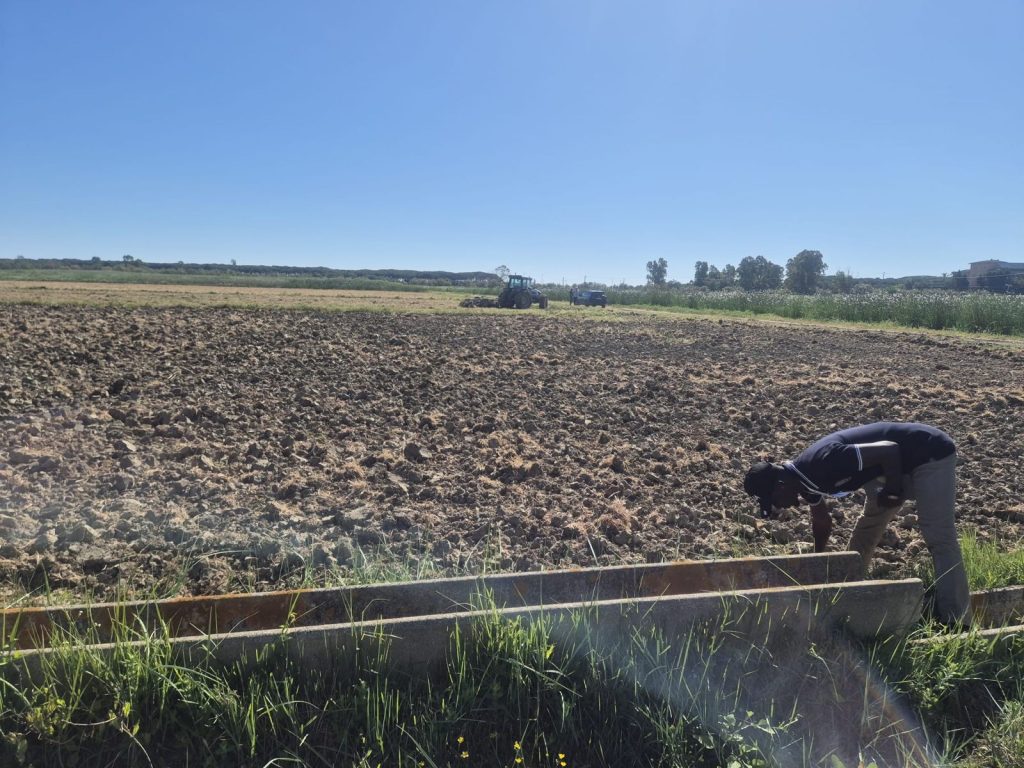
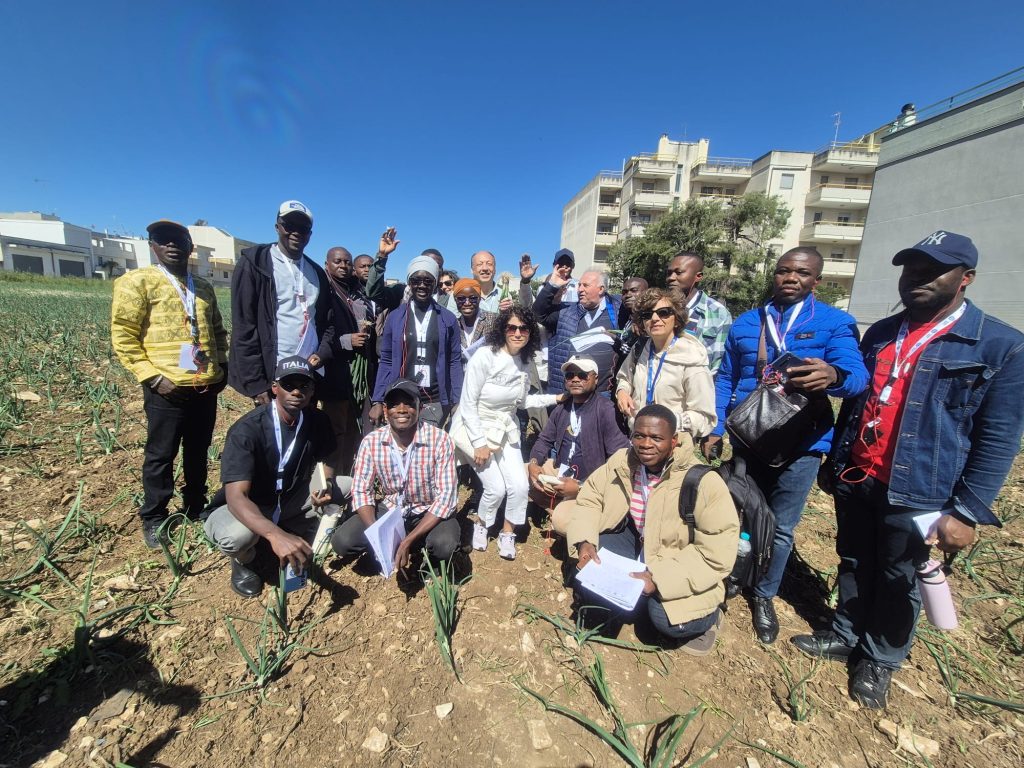
By connecting knowledge, institutions and field experience, AREA Africa continues to promote collaborative networks and sustainable solutions for the future of agriculture across partner countries.
These activities are implemented by CIHEAM Bari through the AREA Africa Programme, which forms part of the Italian international cooperation initiative developed within a balanced public–private partnership framework under the Mattei Plan for Africa. The programme falls within the Action for the Strengthening of Agro-Food Ecosystems in Africa (AREA), co-financed by the Ministry of Foreign Affairs and International Cooperation (MAECI) with CIHEAM Bari serving as the knowledge partner and implementing body for the public component, and BFI acting as the private partner.
Cultivating knowledge. Harvesting change.