International Day of Plant Health – 12 May 2026
Plant Biosecurity for Food Security
Plant Health in Action: Science, Nature and Innovation for Food Security
Plant biosecurity represents the first line of defence against pests and pathogens, ensuring healthy agricultural production throughout the entire value chain, from field to table. Protecting crops means ensuring safe food, preserving environmental resources and supporting biodiversity, while maintaining product quality at every stage of production.
Ensuring plant health today requires a balanced and integrated approach that combines scientific innovation with nature-based solutions. While biological control strategies—based on the use of natural enemies—are increasingly adopted to restore ecological balance, advances in research and technology are enabling the development of more precise, sustainable and effective tools to address phytosanitary challenges.
Through continuous research and innovation, scientific knowledge is increasingly translated into practical applications, supporting more resilient and sustainable agricultural systems, particularly in the Mediterranean region, including through the work carried out by CIHEAM Bari.
FRENEMIES. A story of natural enemies
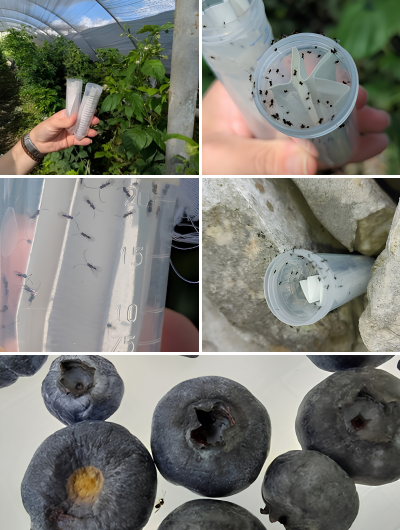
Release of the natural enemy Ganaspis kimorum in crops infested by the spotted wing fly
In agriculture, the first and most common solution to combat plant pests is the use of insecticides, which are known to potentially harm animal health and the environment. In fact, their application is regulated by maximum limits and pre-harvest intervals, which help minimize their negative effects. An alternative approach that is continuously gaining ground in pest control is the use of a wide “army” of wasps, bugs, bacteria, fungi and other organisms that are able to naturally control phytophagous insects. These organisms are called natural enemies. Natural enemies are generally considered a safe control method, with no impact to the final consumer, because they already exist in the environment, and their mode of action is driven by nature.
Each pest has one or more natural enemy: researchers aim to find the most specific and efficient one for each phytophagous, with the goal of making them commercially available for farmers or establishing a natural equilibrium within crops. This is also what we are currently working on at CIHEAM Bari, within the frame of a National Plan aimed at controlling the spotted-wing fly (Drosophila suzukii) using the parasitoid Ganaspis kimorum.
The spotted wing fly is an invasive pest that attacks small red fruits while they are still attached to the plant. The female, in fact, has a serrated ovipositor that allows her to cut the skin of healthy fruit and lay her eggs. The larvae then develop inside the fruit causing rotting and sometimes significant yield losses. Ganaspis kimorum is a small wasp that lays its egg inside the fly larva. This is the common mode of action of parasitoids, called “parasitization”. The parasitoid larva feeds and develops inside its host, eventually leading to its death.
At CIHEAM Bari insectarium we are rearing this beneficial organism for release in cherry, raspberry and other small red fruit crops infested by the spotted wing fly. Our main goal is to determine whether this exotic parasitoid, originating from Asia, can survive and establish in our climatic conditions, and to evaluate its impact on the control of Drosophila suzukii.
Innovation and Integrated Strategies for Food Security
Advances in research and technological innovation are supporting integrated plant health management across agri-food value chains, including the work carried out by CIHEAM Bari
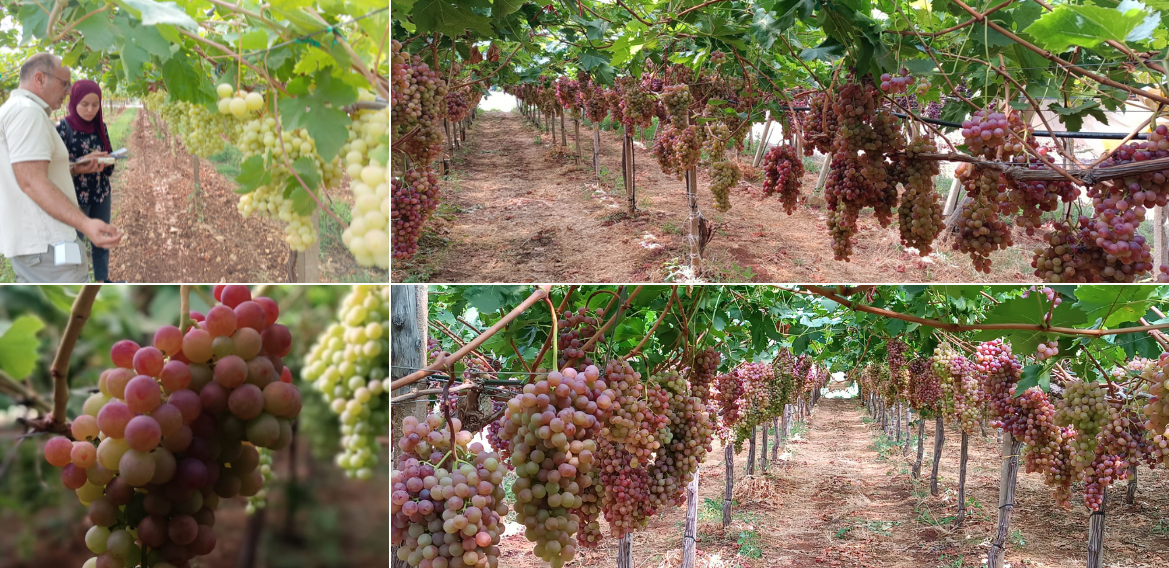
Vine and Wine: Sustainable Alternatives to Fungicides
In collaboration with the CNR-ISPA, eco-compatible strategies have been developed for the control of Ochratoxin A (OTA), a mycotoxin produced by Aspergillus spp.
Research activities focus on reducing the use of synthetic fungicides in vineyards, applying hydrogen peroxide-based treatments integrated with IoT systems for remote monitoring, and testing natural aluminosilicates, which have proven effective in limiting fungal growth and significantly reducing mycotoxin contamination in wine.
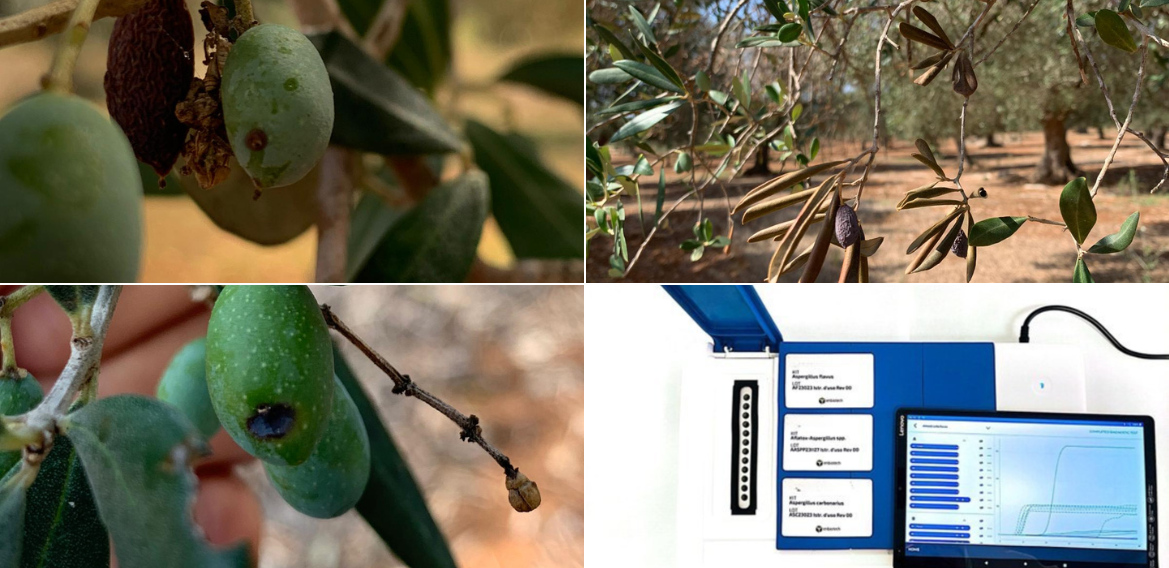
Olive: Early Detection of Pathogens
A molecular diagnostic test (RT-LAMP) specific for Colletotrichum acutatum s.l. and other pathogens enables rapid detection directly in the field.
This tool ensures high sensitivity, early identification of infections even in asymptomatic olives, and supports timely and targeted interventions.
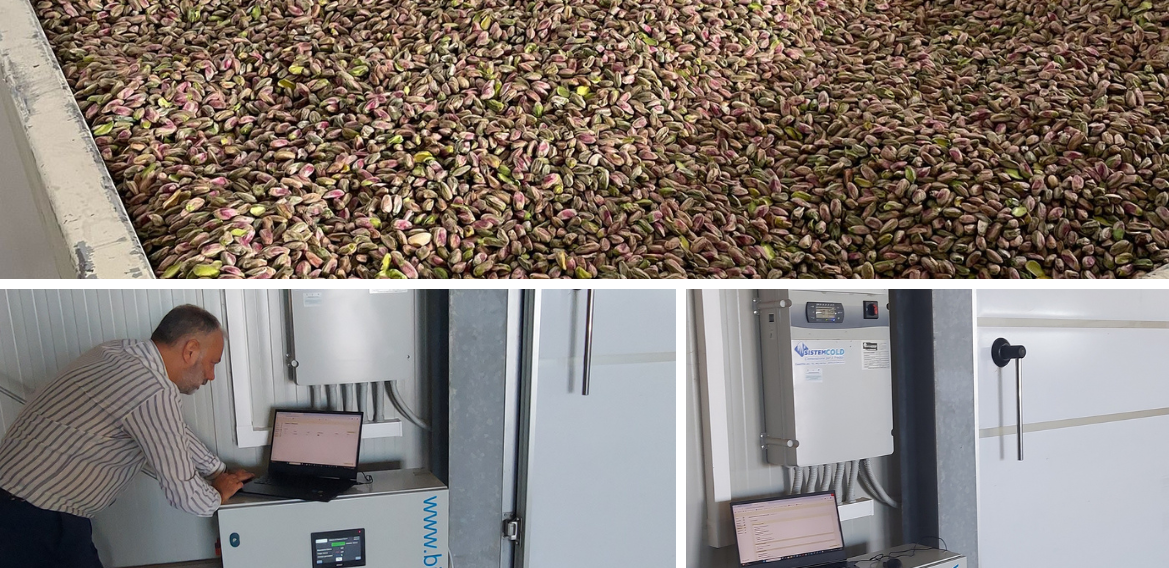
Pistachio: Post-Harvest Biosecurity
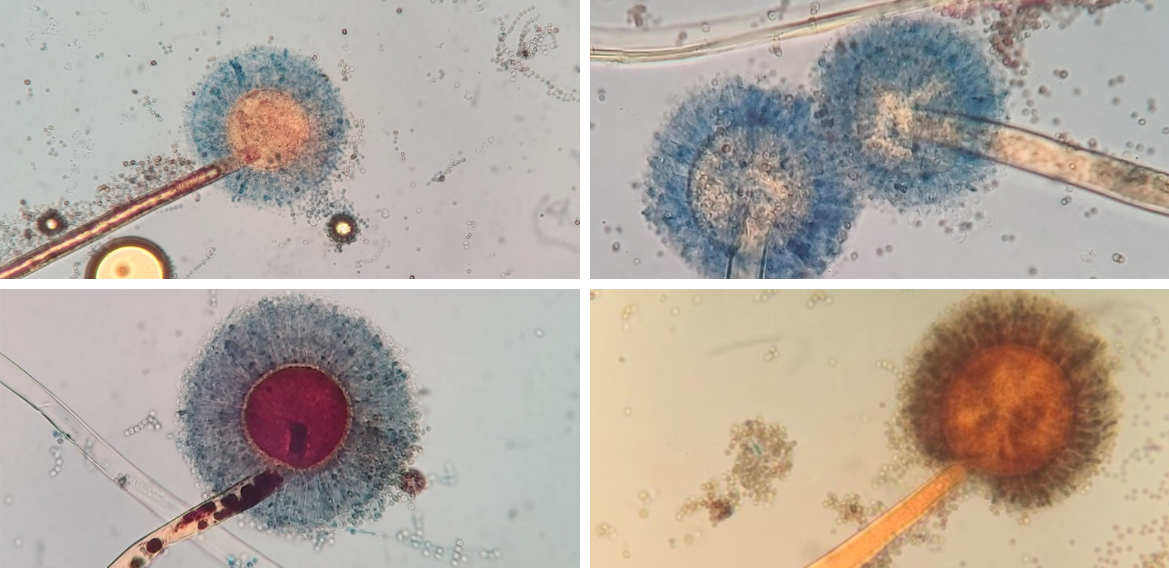
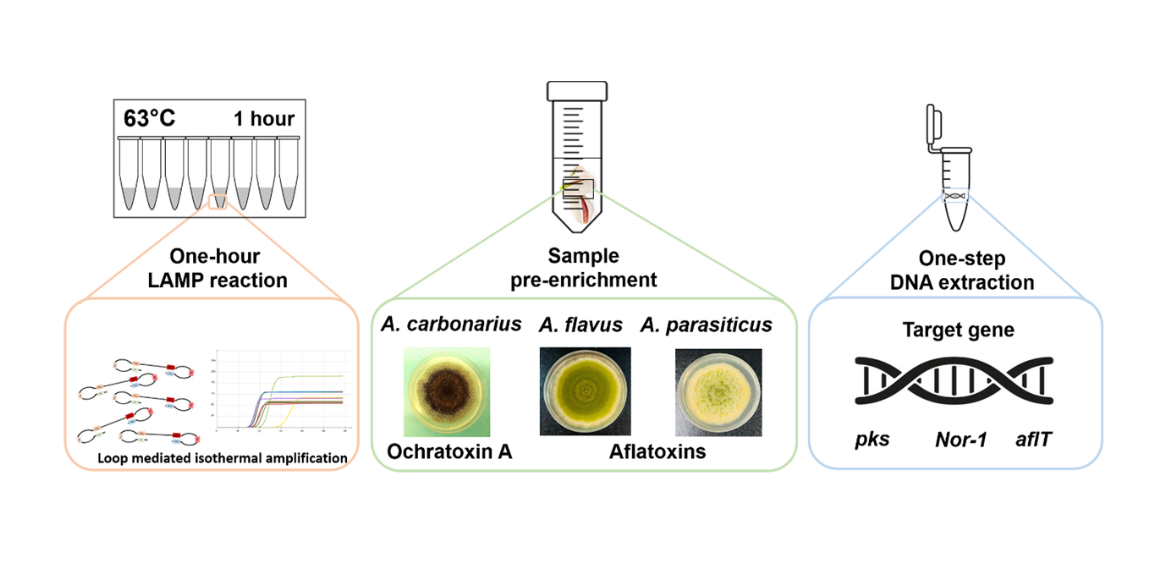
Integrated protocols have been developed to manage toxigenic Aspergillus spp. in storage facilities.
These include early environmental monitoring through spore traps and molecular LAMP kits, as well as calibrated ozone treatments to ensure sanitation, inhibit mycotoxin biosynthesis and preserve product quality.
Digital innovation further strengthens these processes through the integration of IoT systems, digital field and storage logs, and interoperable monitoring platforms across the supply chain.
From Research to Application
From sustainable plant protection strategies to advanced diagnostic tools and post-harvest management systems, research is translated into operational solutions that support farmers and agri-food stakeholders. These approaches contribute to reducing phytosanitary risks while promoting more efficient, safe and sustainable production systems.